

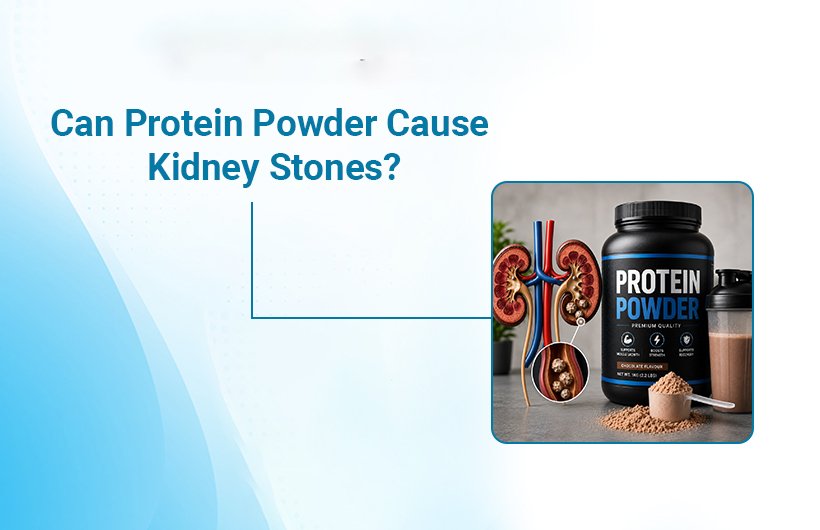
Many fitness enthusiasts and gym-goers regularly use protein powders to support muscle growth and recovery. However, one common concern is whether protein powder can cause kidney stones. The answer is yes, excessive protein supplement intake may increase the risk of kidney stones in some individuals, especially when combined with dehydration, poor dietary habits, or existing kidney problems.
Moderate use of protein powder is generally safe for healthy people. Problems usually occur when protein intake becomes excessive or when supplements are used without proper hydration and nutritional balance.
According to a kidney specialist in Ahmedabad, Dr Ravi Bhadania, understanding how high-protein diets and supplements affect kidney health is important before making protein powder a daily habit.
What Are Kidney Stones?
Kidney stones are hard mineral deposits that form inside the kidneys when certain substances like calcium, oxalate, or uric acid build up in the urine. These stones can vary in size and may cause severe pain if they block the urinary tract.
Common types of kidney stones include:
- Calcium oxalate stones
- Uric acid stones
- Struvite stones
- Cystine stones
Among these, calcium and uric acid stones are more commonly associated with high-protein diets and excessive supplement intake.
Can Protein Powder Cause Kidney Stones?
Yes, excessive protein powder intake may increase the risk of kidney stones in certain individuals. However, protein powder alone does not automatically cause kidney stones in everyone.
The risk depends on several factors, including:
- Amount of protein consumed
- Type of protein powder
- Water intake
- Existing kidney disease
- Family history of kidney stones
- Overall diet and lifestyle
When the body breaks down large amounts of protein, the kidneys work harder to remove waste products. High protein intake can also increase calcium and uric acid levels in urine, which may contribute to kidney stone formation over time.
People with previous kidney stones or kidney disease should be especially careful with long-term supplement use.
How Does Protein Affect the Kidneys?
Protein is essential for muscle repair and overall health, but excessive intake may place additional stress on the kidneys.
High-protein diets can:
- Increase calcium excretion in urine
- Raise uric acid levels
- Reduce citrate levels that protect against stones
- Increase dehydration risk during workouts
When urine becomes concentrated due to low water intake, minerals can crystallise and form stones inside the kidneys.
This risk becomes higher in people who:
- Drink inadequate water
- Consume multiple protein shakes daily
- Follow extreme high-protein diets
- Use additional gym supplements excessively
Which Protein Powders May Increase Kidney Stone Risk?
Some protein supplements may increase kidney stone risk more than others.
Whey Protein
Whey protein is one of the most commonly used fitness supplements. It is derived from milk and contains high levels of protein and calcium.
Excessive whey protein intake may:
- Increase urinary calcium
- Raise uric acid production
- Increase kidney workload
Using multiple scoops daily for long periods without adequate hydration may increase the risk of calcium-based kidney stones.
Can Whey Protein Cause Kidney Stones?
Whey protein itself is not harmful when used in moderation. However, excessive consumption combined with dehydration and poor diet may contribute to kidney stone formation in some individuals.
People who:
- Consume large amounts of whey protein
- Drink insufficient water
- Follow very high-protein diets
- Already have kidney problems
may face a higher risk.
According to Dr. Ravi Bhadania, many patients unknowingly combine high-protein diets, low water intake, and multiple gym supplements, which together may negatively affect kidney health over time.
Animal-Based Protein Powders
Protein powders made from beef, egg, or other animal sources may increase uric acid levels in the body. High uric acid can contribute to uric acid kidney stones.
Excessive intake of animal-based protein supplements may also increase acid load inside the body, which can affect kidney function in susceptible individuals.
Protein Powders with Added Sugar or Sodium
Some low-quality protein powders contain:
- Excess sodium
- Artificial sweeteners
- Added sugars
- Preservatives
High sodium intake may increase calcium levels in urine, which can raise kidney stone risk.
Reading supplement labels carefully is important before regular use.
Are Plant-Based Protein Powders Safer?
Plant-based protein powders may be a better option for some people. Common plant proteins include:
- Pea protein
- Brown rice protein
- Soy protein
- Hemp protein
These options are often lower in compounds associated with kidney stone formation compared to certain animal-based proteins.
However, plant-based protein powders are not completely risk-free. Excessive intake without proper hydration can still affect kidney health.
What Are the Symptoms of Kidney Stones?
Kidney stones may not cause symptoms initially, but larger stones can lead to severe discomfort.
Common symptoms include:
- Sharp pain in the side or lower back
- Burning sensation while urinating
- Blood in urine
- Frequent urination
- Cloudy or foul-smelling urine
- Nausea or vomiting
- Difficulty passing urine
If these symptoms occur, medical evaluation should not be delayed.
How Much Protein Is Too Much?
Protein requirements vary depending on age, body weight, activity level, and overall health.
For most healthy adults, moderate protein intake is safe. Problems usually arise when people consume:
- Multiple protein shakes daily
- High-protein diets with supplements
- Very low water intake
- Excessive gym supplements without supervision
Many people assume that more protein automatically means better muscle growth, but excess protein does not necessarily improve fitness results.
Who Should Use Protein Powder Carefully?
Certain individuals should be extra cautious with protein supplements.
- People with Kidney Disease: Damaged kidneys may struggle to process excess protein efficiently.
- People with Previous Kidney Stones: High protein intake may increase recurrence risk.
- Diabetic Patients: Diabetes already increases the risk of kidney-related complications.
- Individuals Following Extreme Diets: Very high-protein diets without balanced nutrition may increase stone formation risk.
- People Using Multiple Supplements: Combining protein powder with creatine and pre-workout supplements may increase kidney stress if not monitored properly.
How to Reduce Kidney Stone Risk While Using Protein Powder
The good news is that kidney stone risk can often be reduced with healthy habits.
1) Drink Enough Water
Hydration is one of the most important factors in preventing kidney stones. Water helps dilute minerals in urine and prevents crystal formation.
People using protein supplements should increase water intake, especially during exercise and hot weather.
2) Avoid Excessive Protein Intake
Stick to the recommended serving size instead of taking unnecessary extra scoops daily.
3) Eat a Balanced Diet
Include:
- Fruits
- Vegetables
- Whole grains
- Fibre-rich foods
along with protein supplements.
4) Reduce Salt Intake
High sodium intake may increase calcium excretion in urine and raise kidney stone risk.
5) Choose Trusted Supplement Brands
Use high-quality products tested for safety and purity.
6) Get Regular Health Checkups
People with kidney disease, diabetes, or a history of kidney stones should consult a kidney specialist before using supplements regularly.
Protein Powder vs Natural Protein Sources
Natural protein sources often provide better nutritional balance than supplements alone.
Healthy protein sources include:
- Eggs
- Fish
- Lentils
- Paneer
- Yogurt
- Nuts
- Chicken
- Beans
Whole foods also provide vitamins, minerals, and fibre that many supplements lack.
Protein powders should ideally supplement a balanced diet rather than replace natural food completely.
Conclusion
Protein powder can support fitness and muscle recovery, but excessive intake may increase the risk of kidney stones in some individuals. The risk becomes higher when supplements are combined with dehydration, poor dietary habits, or existing kidney problems.
Using protein powder in moderation, drinking enough water, and maintaining a balanced diet can help protect kidney health. People with kidney disease or a history of kidney stones should consult a specialist before starting long-term protein supplementation.
According to Dr. Ravi Bhadania, balanced nutrition and responsible supplement use are important for maintaining long-term kidney health. If you experience symptoms like severe back pain, blood in urine, or painful urination, consult a kidney specialist for proper evaluation and treatment.