

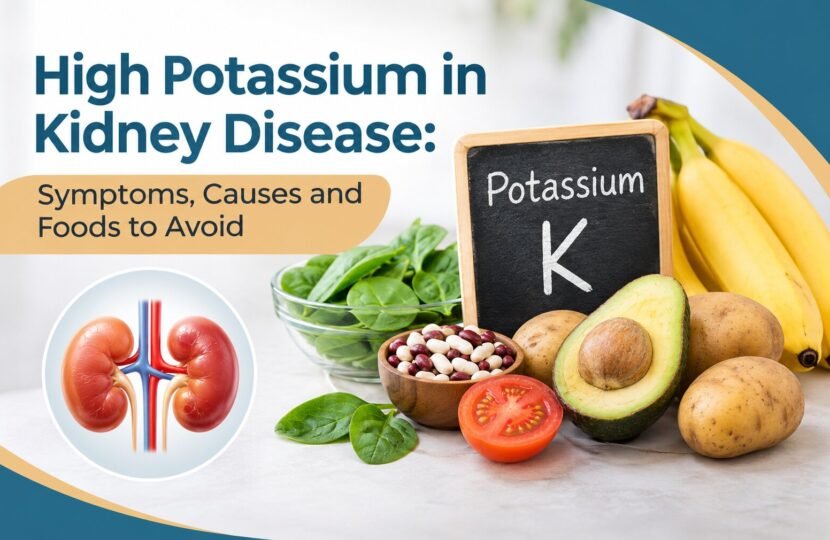
High potassium in kidney disease (hyperkalemia) means your blood potassium is above 5.0 mmol/L because weak kidneys cannot remove the extra potassium. It often has no symptoms, but it can cause muscle weakness, tingling, tiredness and an irregular heartbeat. Common causes are advanced CKD, some BP medicines and high potassium foods like banana, coconut water, potato and spinach.
Almost every week in my clinic, a patient walks in holding a report with one number circled in red: potassium 5.8. Most of them feel completely fine. That is exactly what makes high potassium so risky. It can quietly reach a level that disturbs the heart before you notice anything.
The good news is that high potassium is very manageable once you understand why it happens. In this guide, I will explain what your potassium number means, the warning signs to watch for, the hidden causes I see most often in Indian patients, and the foods to limit (with simple swaps you can use at home).
What is hyperkalemia (high potassium)?
Hyperkalemia is the medical name for too much potassium in the blood. Potassium is a mineral your nerves and muscles need, including your heart muscle. Healthy kidneys keep it in a narrow safe range by passing the extra amount out in urine. To understand this better, read how your kidneys work.
What is a normal potassium level?
For most adults, normal blood potassium is 3.5 to 5.0 mmol/L (the same as mEq/L). Your lab’s range may differ slightly. Here is how I explain the numbers to my patients:
| Blood potassium (mmol/L) | What it means | What to do |
| Below 3.5 | Low (hypokalemia) | Also risky; your doctor may increase potassium |
| 3.5 to 5.0 | Normal | Keep following your diet and medicine plan |
| 5.1 to 5.9 | Mild to moderate high | Call your nephrologist within a day or two; diet and medicine review |
| 6.0 and above | Severe high | Contact your doctor the same day |
| 6.5 and above, or any level with chest pain, palpitations or severe weakness | Emergency | Go to the nearest emergency room now |
Dialysis patients often have a slightly higher target, up to about 5.5 mmol/L, set by their dialysis team. One more point: how fast potassium rises matters as much as the number itself. A quick jump from 4.5 to 6.0 is more dangerous than a level that has slowly settled at 5.5.
Why does kidney disease cause high potassium?
Kidney disease causes high potassium because damaged kidneys cannot remove enough potassium in urine, so it builds up in the blood. In early chronic kidney disease, the kidneys usually adjust well. The risk rises sharply in CKD stage 3b to 5, roughly when eGFR falls below 45. If your report shows eGFR 45 or lower, ask your doctor to check potassium regularly.
Common causes of high potassium in kidney patients
In my practice, high potassium is rarely due to one thing. It is usually weak kidneys plus one or two triggers:
- Reduced kidney function. The main cause. Less filtering means less potassium leaves the body.
- Blood pressure and heart medicines. ACE inhibitors (ramipril, enalapril), ARBs (telmisartan, losartan) and spironolactone protect the kidneys and heart, but they can raise potassium. Never stop them on your own; your doctor can adjust the dose or add a potassium binder.
- Painkillers (NSAIDs). Ibuprofen, diclofenac and similar over the counter painkillers raise potassium and can harm the kidneys.
- Other medicines. Trimethoprim (an antibiotic), tacrolimus and cyclosporine (after kidney transplant), heparin and potassium supplements.
- Low sodium salt. Many “lite” or “low sodium” salts replace sodium with potassium chloride. This is one of the most common hidden causes I see in Indian homes.
- High potassium foods in large amounts. Coconut water, banana shakes, dry fruits and tomato soup can push potassium up quickly.
- Uncontrolled diabetes. Insulin helps move potassium into cells. Very high sugar or low insulin keeps more potassium in the blood.
- Metabolic acidosis. When kidneys cannot clear acid, potassium shifts out of cells into the blood.
- Dehydration, vomiting or diarrhoea. Less fluid reaching the kidneys means less potassium is removed.
- Constipation. The gut also removes potassium, so chronic constipation can raise levels.
- Missed or shortened dialysis. For dialysis care patients, the long weekend gap is when potassium is highest.
A false high result is also possible. If the blood sample is shaken, delayed or drawn with a tight tourniquet, red cells break and release potassium (haemolysis). If your report is high but unexpected, your doctor may simply repeat the test.
Symptoms of high potassium in kidney disease
Most people with mildly high potassium have no symptoms at all. That is why regular blood tests matter more than waiting to feel unwell. When symptoms do appear, usually above 6.0 mmol/L, they can include:
- Muscle weakness, especially in the legs
- Tiredness or feeling heavy
- Tingling or numbness in hands, feet or around the mouth
- Muscle cramps or twitching
- Nausea or an upset stomach
- Slow, fast or irregular heartbeat (palpitations)
These signs are vague and easy to blame on age, diabetes or a long day. If you have kidney disease and notice them, especially after eating a high potassium food or starting a new medicine, get your potassium checked.
Emergency warning signs: go to hospital immediately
Severe hyperkalemia can stop the heart without much warning. Call for help or go to the nearest emergency department if you have kidney disease and develop:
- Chest pain or a pounding, irregular heartbeat
- Shortness of breath
- Sudden severe weakness or inability to move your arms or legs
- Fainting or feeling like you will collapse
- A potassium report of 6.5 mmol/L or higher
In emergency, doctors do an ECG first because the heart shows high potassium before the patient feels it.
High potassium foods to avoid with kidney disease
If your potassium is high, limit foods that have more than 200 mg of potassium per serving. The biggest culprits in Indian homes are banana, coconut water, potato, spinach, tomato, dry fruits, rajma and chole, and low sodium salt. You do not need to stop all fruits and vegetables; you need the right choice and the right portion.
Values below are approximate per 100 g (raw unless stated) and vary by variety and cooking.
| Food | Potassium (approx. mg per 100 g) | Lower potassium swap |
| Low sodium or “lite” salt (potassium chloride) | Very high, thousands of mg | Regular salt in small amounts, lemon, jeera, ajwain, herbs |
| Raisins (kishmish) | 750 | A few fresh grapes |
| Almonds | 730 | 2 to 3 almonds only if allowed; read our almonds guide |
| Dates (dried khajur) | 650 to 700 | Small piece of homemade low sugar sweet |
| Arbi (colocasia) | 590 | Leached arbi in small portion, or lauki |
| Spinach (palak) | 560 | Cabbage, lettuce, small portion of leached methi |
| Avocado | 485 | Cucumber |
| Drumstick (saragva) | 460 | Turai (ridge gourd), tinda |
| Jackfruit (fanas) | 450 | Pineapple |
| Potato (aloo) | 420 | Leached potato, or rice and poha |
| Guava (jamfal) | 420 | Apple, pear |
| Rajma, chole (cooked) | 290 to 400 | Smaller portion of moong dal, soaked and boiled with water discarded |
| Banana | 360 | Apple, pear, papaya (small) |
| Sweet potato (shakkariya) | 340 | Leached sweet potato in small portion |
| Kiwi | 310 | Strawberries |
| Coconut water (per 100 ml) | 250 | Plain water, as per fluid limit |
| Custard apple (sitaphal) | 250 to 290 | Small 50 g portion only if allowed |
| Tomato | 240 | Use less tomato in gravy; add capsicum or onion |
| Pomegranate (anar) | 235 | Watermelon |
| Milk and curd (per 100 ml) | 150 to 155 | Limit to the amount your doctor or dietitian sets |
Low potassium foods kidney patients can usually enjoy
These are lower in potassium (usually under 200 mg per 100 g) and fit most low potassium diets in normal portions:
- Fruits: apple, pear, watermelon, pineapple, strawberries, grapes, papaya in small portions
- Vegetables: cabbage, cauliflower (cooked), lauki (bottle gourd), turai, tinda, cucumber, onion, capsicum, boiled French beans, lettuce
- Grains: white rice, poha, rava (sooji), vermicelli, plain roti in your advised portion
- Drinks: plain water, lemon water without low sodium salt, as per your fluid limit
Portion still matters. Three “low potassium” apples can add up to more potassium than one banana. For a full plan based on your reports, see our kidney friendly diet service.
8 practical ways to lower potassium at home
- Leach high potassium vegetables. Peel and cut aloo, arbi or shakkariya into thin pieces. Soak in warm water (about 10 times the amount of vegetable) for at least 2 hours, changing the water once. Rinse, then boil in fresh water and throw that water away before cooking. This can remove a good part of the potassium, though not all of it.
- Throw away cooking water. Do not drink the water from boiled vegetables or dal, and avoid soups made from it.
- Stop low sodium salt. Check your salt packet. If it says potassium chloride, replace it. Flavour food with lemon, jeera, ajwain, hing, ginger, garlic and fresh coriander instead.
- Read labels for potassium additives. Packaged soups, instant noodles, sports drinks and some namkeen contain potassium chloride, potassium citrate or potassium phosphate. Added potassium is absorbed almost fully.
- Skip coconut water and fresh juices. One glass of juice packs the potassium of several fruits. Eat a small whole fruit instead.
- Watch festival foods. Dry fruit boxes, khajur rolls and fruit based sweets raise potassium fast. Our Diwali sweets guide shows safer choices.
- Avoid constipation. Fibre from low potassium fruits and vegetables, plus your doctor’s advice on laxatives, helps your gut remove potassium.
- Review every medicine and supplement. Show your nephrologist all tablets, ayurvedic powders, protein powders and painkillers you take. Some herbal products contain hidden potassium.
How much potassium per day? People who need a potassium restricted diet are often advised about 2,000 to 3,000 mg per day, but your limit depends on your kidney function, your report and your medicines. Do not cut fruits and vegetables completely; too little potassium is also harmful.
How is high potassium diagnosed?
High potassium is diagnosed with a simple blood test called serum potassium, usually done with creatinine and eGFR in a kidney function test (KFT/RFT). If the level is high, your doctor may order an ECG to check its effect on the heart, a repeat sample to rule out a false high result, and tests for sugar and acid levels (bicarbonate). At Alfa Kidney Care, our approach to precise diagnosis and treatment is to find the cause, not just lower the number.
How is high potassium treated in kidney disease?
Treatment depends on how high the level is and how fast it rose.
Emergency treatment (hospital): doctors protect the heart with intravenous calcium, shift potassium into cells with insulin and glucose or salbutamol nebulisation, and remove it from the body with medicines or urgent dialysis.
Long term control (clinic):
- A low potassium diet planned around your reports
- Adjusting or timing medicines that raise potassium, rather than stopping kidney protective drugs
- Water pills (diuretics), which work when kidney function is still reasonable
- Sodium bicarbonate tablets if blood is too acidic
- Potassium binders, powders that trap potassium in the gut so it leaves in stool
- Better sugar control in diabetes and regular dialysis for patients who need it
When should you see a nephrologist?
See a kidney specialist if your potassium is above 5.0 more than once, if you have CKD and take BP medicines like telmisartan or ramipril, or if you feel weakness or palpitations after certain foods. Not sure whether you need a nephrologist or a urologist? For potassium, creatinine and kidney function, a nephrologist is the right doctor.
The bottom line
High potassium in kidney disease is common, often silent and very treatable. Know your number, avoid low sodium salt and coconut water, leach your vegetables, choose lower potassium fruits and never stop your medicines without advice. Small daily habits protect your heart and your kidneys.
Worried about a high potassium report? Book a consultation with Dr. Ravi Bhadania at Alfa Kidney Care, Ahmedabad, or call +91 94849 93617.
Medical disclaimer: This article is for general education and does not replace advice from your own doctor or renal dietitian. If you have chest pain, breathlessness or sudden weakness, seek emergency care immediately.
Reference: National Kidney Foundation, High Potassium (Hyperkalemia).
Frequently Asked Questions
What potassium level is dangerous for kidney patients?
A blood potassium above 6.0 mmol/L is considered severe and needs same day medical advice. A level of 6.5 or higher, or any high level with chest pain, palpitations or sudden weakness, is an emergency. Normal is 3.5 to 5.0 mmol/L.
Is potassium 5.5 dangerous?
Potassium 5.5 mmol/L is mildly high. It is usually not an emergency if you feel well, but it needs attention. Your nephrologist will review your diet, medicines and kidney function, and may repeat the test within a few days.
What are the first signs of high potassium?
Often there are no early signs. When they appear, the first signs are usually muscle weakness, tiredness, tingling in the hands or feet, nausea and an irregular or pounding heartbeat.
Which fruits should kidney patients avoid for high potassium?
Limit banana, coconut water, guava, kiwi, jackfruit, dried dates, raisins, avocado, pomegranate and custard apple. Lower potassium choices include apple, pear, watermelon, pineapple, grapes and strawberries in normal portions.
Can kidney patients drink coconut water?
Most patients with advanced CKD or high potassium should avoid coconut water. One glass (about 250 ml) can contain over 600 mg of potassium. Ask your nephrologist before drinking it.
Is low sodium salt safe for kidney patients?
Usually no. Most low sodium or “lite” salts use potassium chloride, which can raise blood potassium to dangerous levels in kidney disease. Use small amounts of regular salt and natural spices instead.
Does drinking more water lower potassium?
Not directly. Staying hydrated helps kidneys work, but extra water cannot flush out potassium if kidney function is low, and many CKD patients have a fluid limit. Follow your doctor’s fluid advice.
Can high potassium be cured?
High potassium can be brought back to normal and kept there with diet changes, medicine adjustments, potassium binders and dialysis when needed. If kidney disease is the cause, it needs ongoing control rather than a one time cure.