

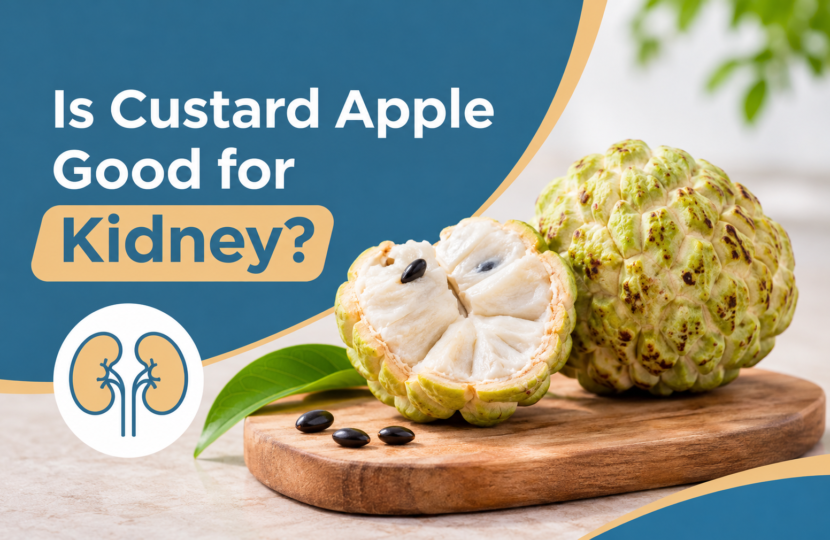
Yes, custard apple (sitaphal) is good for healthy kidneys. It gives vitamin C, fiber and potassium that support blood pressure and overall health. But it is a medium to high potassium fruit, about 250 to 290 mg per 100 g. If you have chronic kidney disease, high potassium or are on dialysis, eat only a small portion and only if your nephrologist agrees.
Every winter, the carts outside our clinic in Ahmedabad fill up with sitaphal. And every winter, patients ask me the same thing: “Doctor, can I eat custard apple with my kidney problem?”
It is a fair question. Custard apple is sweet, creamy and full of nutrients. Yet many kidney patients have been told to “avoid all fruits,” while others read online that it can even heal the kidneys. Neither is true. In this guide, I will explain what custard apple really does for your kidneys, how much is safe for you, and when you should skip it. If you are planning a full kidney friendly diet, this will help you fit sitaphal into it safely.
Custard apple nutrition: what is inside one fruit?
In India, “custard apple” usually means sitaphal (sugar apple, Annona squamosa). Here is what 100 g of its pulp contains, about half a medium fruit.
| Nutrient | Per 100 g pulp | Why it matters for kidneys |
| Energy | 94 kcal | Fairly high for a fruit |
| Carbohydrates | 23.6 g (mostly natural sugar) | Matters if you have diabetes |
| Fiber | 4.4 g | Helps digestion and bowel movement |
| Vitamin C | 36.3 mg | Antioxidant support |
| Potassium | 247 to 290 mg | The key number for CKD patients |
| Phosphorus | 32 to 35 mg | Low, which is good news for CKD |
| Sodium | 7 to 9 mg | Very low |
| Protein | 2.1 g | Small amount |
One medium custard apple gives about 135 g of edible pulp. That means roughly 330 to 390 mg of potassium in a single fruit.
Is custard apple good for healthy kidneys?
For people with normal kidney function, custard apple is a healthy fruit. Here is how it helps:
- Supports healthy blood pressure. Potassium helps your body balance sodium. Since high blood pressure is one of the top causes of kidney damage, a potassium rich diet is good for kidney protection when your kidneys are healthy.
- Gives antioxidants. Vitamin C and plant compounds help fight oxidative stress in the body.
- Low in sodium and phosphorus. Both are minerals that kidney patients often need to limit, and custard apple has very little of them.
- Good fiber. Fiber keeps digestion regular, which also helps the body clear waste.
One honest note: there are no strong human studies proving that custard apple protects or repairs kidneys. Its benefits come from being a nutritious fruit, not from any special kidney healing power.
Why potassium is the real question for kidney patients
Your kidneys remove extra potassium from your blood. To understand this better, read how your kidneys work. When kidney function falls, potassium can build up. This is called hyperkalemia.
High potassium is dangerous because it affects your heart rhythm. It often causes no symptoms until it is serious. When symptoms appear, they can include muscle weakness, tiredness, tingling, a slow or irregular heartbeat and, in severe cases, cardiac arrest.
That is why the question is never just “Is this fruit healthy?” It is “How much potassium can my kidneys handle today?”
Can kidney patients eat custard apple? Advice by stage
The answer depends on your kidney function, your blood potassium report and your medicines. Use this table as a general guide, and confirm it with your own nephrologist.
| Your situation | Can you eat custard apple? | General portion guide |
| Healthy kidneys | Yes | 1 medium fruit a day is fine |
| Chronic kidney disease stage 1 to 2, normal potassium | Usually yes | Half to 1 small fruit, a few times a week |
| CKD stage 3 (eGFR 30 to 59, for example eGFR 45) | Only if your potassium is normal | About 50 g (a quarter to half fruit), occasionally |
| CKD stage 4 to 5, not on dialysis | Usually limit or avoid | Only with your doctor’s approval |
| Hemodialysis (dialysis care) | Mostly avoid | A small taste only if your reports allow; never before a long gap between sessions |
| Peritoneal dialysis | Sometimes allowed | Many PD patients lose potassium, so ask your team |
| After kidney transplant | Usually yes | Watch potassium if you take tacrolimus |
| Potassium above normal on your report | Avoid for now | Restart only when your doctor says so |
A useful rule: kidney diet experts call a fruit serving “low potassium” when it has under 200 mg. A 50 g portion of custard apple (about 125 to 145 mg) fits within that. A whole fruit does not.
How much custard apple is safe? 6 practical tips
- Know your number first. Ask your doctor for your blood potassium result and your daily potassium limit. Many people on potassium restriction are given around 2,000 mg a day, but your limit is personal.
- Share, do not finish. Split one sitaphal between two or three family members instead of eating it alone.
- Count it as your fruit for the day. If you eat custard apple, skip other medium or high potassium fruits like banana that day.
- Avoid sitaphal basundi, shakes and ice cream. Milk adds more potassium and phosphorus, and sugar adds calories.
- Never eat or crush the seeds. Custard apple seeds are toxic and can irritate the eyes and skin.
- Check your medicines. Some blood pressure medicines (ACE inhibitors, ARBs) and water pills like spironolactone can raise potassium. Ask your doctor before adding high potassium foods.
Custard apple vs other common fruits (potassium per 100 g)
| Fruit | Potassium (approx. mg per 100 g) | For a potassium restricted diet |
| Apple | 107 | Lower choice |
| Watermelon | 112 | Lower choice |
| Papaya | 182 | Moderate, small portion |
| Custard apple (sitaphal) | 247 to 290 | Limit portion |
| Banana | 358 | Limit or avoid |
If you love sweet fruits but need to keep potassium low, apple, watermelon, pear and berries are easier choices.
Is custard apple good for kidney stones?
There is no good evidence that custard apple causes kidney stones, and it is not usually listed among high oxalate foods. Its water content and potassium may even be helpful for people with normal kidney function who form stones. If you have both stones and reduced kidney function, follow the potassium advice above.
Common myths about custard apple and kidneys
- Myth: Custard apple can cure kidney failure. False. Some lab studies on related plants report interesting compounds, but nothing shows the fruit can reverse kidney disease in people.
- Myth: Kidney patients must avoid all fruits. False. Most kidney patients can enjoy fruit in the right portion. The goal is balance, not fear.
- Myth: Natural foods are always safe. False. Too much of a healthy, high potassium fruit can still be harmful when kidneys cannot remove the extra potassium.
Who should be careful with custard apple?
- People with CKD stage 3 or above, or with high potassium on a recent report
- People on hemodialysis
- People with diabetes, since one fruit has a lot of natural sugar (diabetes is a leading cause of kidney disease; read our guide on sweets and festive foods)
- People taking medicines that raise potassium
When should you see a nephrologist?
See a kidney specialist if you have swelling in your feet, foamy urine, high creatinine, reduced eGFR, or muscle weakness and palpitations after eating high potassium foods. Not sure whether you need a nephrologist or a urologist? For kidney function, potassium and diet, a nephrologist is the right doctor.
The bottom line
Custard apple is a healthy fruit and good for people with normal kidneys. For kidney patients, it is not banned, but it needs a portion limit. Your kidney stage, your potassium report and your medicines decide how much is safe for you.
Want a diet plan made for your own reports? Book a consultation with Dr. Ravi Bhadania at Alfa Kidney Care, Ahmedabad, or call +91 94849 93617.
Medical disclaimer: This article is for general education and does not replace advice from your own doctor or renal dietitian.
Frequently Asked Questions
Is custard apple good for kidney health?
Yes, for people with healthy kidneys. Custard apple gives vitamin C, fiber and potassium, and is low in sodium and phosphorus. People with chronic kidney disease or dialysis should limit it, because 100 g contains about 250 to 290 mg of potassium.
Can CKD patients eat custard apple?
Some can, in small amounts. If your blood potassium is normal and you are in CKD stage 1 to 3, about 50 g (a quarter to half fruit) occasionally is usually acceptable. In stage 4 to 5 or with high potassium, avoid it unless your nephrologist approves.
Can dialysis patients eat sitaphal?
Most hemodialysis patients should avoid sitaphal or take only a small taste when their reports allow. Potassium builds up between sessions, especially over a long weekend gap. Peritoneal dialysis patients sometimes have more freedom, so ask your dialysis team first.
How much potassium is in one custard apple?
One medium custard apple has about 135 g of pulp, which contains roughly 330 to 390 mg of potassium. That is more than the 200 mg limit kidney dietitians use to define a low potassium fruit serving.
Is custard apple high in potassium?
It is a medium to high potassium fruit. Custard apple has about 247 to 290 mg per 100 g, more than apple (107 mg) or papaya (182 mg) but less than banana (358 mg).
Does custard apple cause kidney stones?
No good evidence shows that custard apple causes kidney stones, and it is not usually listed among high oxalate foods. People with stones and normal kidney function can eat it in normal amounts.
Is custard apple good for creatinine?
Custard apple does not lower creatinine. Creatinine reflects kidney function, and no fruit can reverse kidney damage. If your creatinine is high, see a nephrologist and check your potassium before adding sitaphal to your diet.