
By Dr. Ravi Bhadania, MD (Internal Medicine), DM (Nephrology, Gold Medalist, SGPGIMS Lucknow)
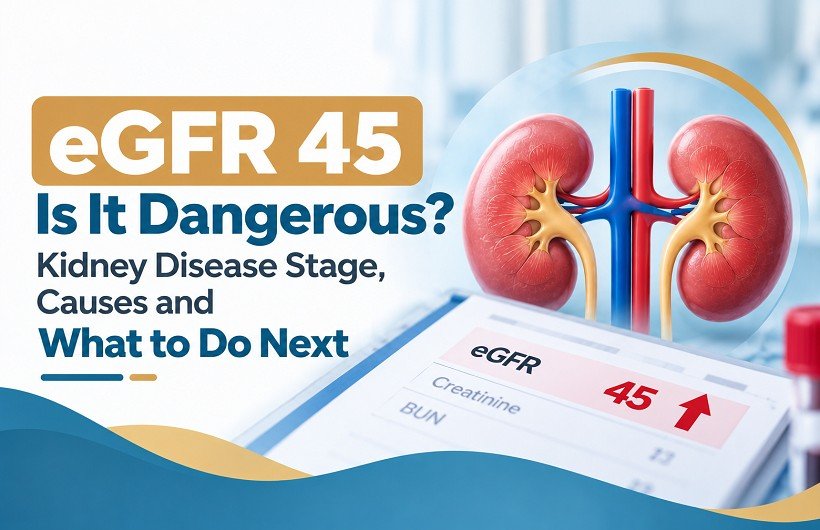
Your report says eGFR 45, and now you are asking: eGFR 45 is it dangerous?
eGFR 45 is not an emergency, but it is not normal. It falls in stage 3a chronic kidney disease (CKD). Your kidneys filter about 45 mL of blood per minute, while a healthy kidney filters 90 or more.
As a nephrologist in Ahmedabad, I know this number is worrying to see. Early chronic kidney disease treatment can protect the function you still have.
eGFR 45 Which Stage? Stage 3a Kidney Disease Explained
KDIGO, the international guideline body for kidney care, places eGFR 45 to 59 in stage G3a (“mildly to moderately decreased”).
eGFR 45 sits at the lower edge of this band. A result of 44 would be stage 3b.
| Stage | eGFR (mL/min/1.73 m²) | What it means |
| G1 | 90 or above | Normal (CKD only if kidney damage is present) |
| G2 | 60 to 89 | Mildly reduced |
| G3a | 45 to 59 | Mild to moderate loss |
| G3b | 30 to 44 | Moderate to severe loss |
| G4 | 15 to 29 | Severe loss |
| G5 | Below 15 | Kidney failure |
eGFR 45 Meaning: What Your Kidneys Are Doing Right Now
eGFR stands for estimated glomerular filtration rate. It is a calculation from your blood creatinine, age and sex.
Think of your kidneys as a filter. At 90, it works at full speed. At 45, it works at about half speed.
Most labs use the CKD-EPI equation that KDIGO recommends, so small differences between labs are normal.
Two points matter here:
- One reading does not confirm CKD. The result must stay below 60 for at least 3 months.
- A short-term dip from dehydration, infection or a painkiller can look like CKD.
Is eGFR 45 Dangerous? Your Urine Protein Decides the Risk
The eGFR number alone does not tell the whole story. Doctors also check urine albumin (the ACR test). Two people with eGFR 45 can have very different risk.
| Urine albumin (ACR) | Category | Risk at eGFR 45 to 59 (KDIGO) |
| Below 30 mg/g | A1 | Moderately increased |
| 30 to 300 mg/g | A2 | High |
| Above 300 mg/g | A3 | Very high |
CKD also raises heart disease risk. For many patients, protecting the heart matters as much as protecting the kidneys.
The real danger is a fast decline. KDIGO treats a sustained drop of more than 5 mL/min per year as rapid progression.
If your numbers stay steady, many people live well with stage 3a for years.
What Causes eGFR to Fall to 45?
Finding the cause decides the treatment. The common ones are:
- Long-standing diabetes or high blood pressure (the two leading causes)
- Kidney inflammation (glomerulonephritis) or inherited cysts
- Blockage from stones or an enlarged prostate
- Repeated urinary infections
- Regular use of painkillers (NSAIDs) or unregulated herbal products
- Age-related decline and a past episode of acute kidney injury
Normal-Looking Creatinine but eGFR 45? Why This Happens
Many patients say, “My creatinine is only slightly high, so how is my eGFR 45?”
Creatinine comes from muscle. In older, lean or small-built people, muscle mass is low, so creatinine can look almost normal even when filtering has dropped.
This is why doctors rely on eGFR, not creatinine alone. If your report shows only creatinine, ask for the eGFR as well.
Can eGFR 45 Improve?
It depends on the cause.
- Temporary cause: If dehydration, infection or a medicine caused the dip, eGFR often returns close to your earlier level.
- Chronic cause: The National Kidney Foundation notes that people with CKD are typically unable to raise eGFR significantly.
So the realistic goal is to hold your eGFR steady and stop it from sliding. You can read more in our guide on whether kidney damage can be reversed.
What to Do if eGFR Is 45: 8 Steps
- Repeat the test in 3 months with a urine ACR. This confirms the stage.
- Control blood pressure. Your doctor will set your target.
- Control blood sugar if you have diabetes.
- Stop NSAIDs such as ibuprofen and diclofenac. See why in our guide to painkillers and kidney damage.
- Cut salt. KDIGO suggests less than 2 g of sodium (about 5 g of salt) a day.
- Eat moderate protein. About 0.8 g per kg of body weight daily is the usual guide. Avoid high-protein diets and supplements.
- Move 150 minutes a week and quit smoking.
- Review every medicine with your doctor. Some doses need adjusting below eGFR 60.
What to Eat With eGFR 45: A Practical Indian Plate
You rarely need a strict “kidney diet” at stage 3a. Simple, steady habits work better.
- Cook at home and go easy on salt in dal, sabzi and rotli
- Limit pickles, papad, namkeen, chips and packaged snacks, which are high in sodium
- Keep portions of dal, paneer and eggs moderate instead of adding protein powder
- Eat vegetables, fruits and whole grains daily
- Do not cut potassium-rich foods such as banana or coconut water unless your blood potassium is high
Your nephrologist will adjust this plan if your reports change.
Stage 3a Kidney Disease Treatment: What a Nephrologist Checks
Treatment targets the cause and the risk. It may include medicines that lower urine protein and protect the kidney, such as ACE inhibitors, ARBs or SGLT2 inhibitors, when they suit you.
At your visit, Dr. Ravi Bhadania will usually review:
- eGFR and urine ACR trend
- Kidney ultrasound
- Haemoglobin, potassium, calcium and phosphorus
- Cystatin C, if creatinine may be misleading (for example, in gym-goers using creatine)
KDIGO suggests monitoring stage G3a one to three times a year, based on urine protein.
Bring these to your first visit:
- All earlier creatinine and eGFR reports, even from years ago
- A list of every medicine, including herbal products and painkillers
- A home blood pressure and sugar log
Warning Signs: When to See a Doctor Soon
Book a visit promptly if you notice:
- Swelling in the feet, ankles or around the eyes
- Foamy urine or blood in urine
- Passing much less urine than usual
- Constant tiredness, poor appetite or itching
- Uncontrolled blood pressure
Go to an emergency department for breathlessness, chest pain, confusion or almost no urine.
3 Myths About eGFR 45
- Myth: I will need dialysis soon. Fact: Most people with stage 3a are far from dialysis, and the outcome depends on the cause, urine protein and how fast eGFR changes.
- Myth: Herbal or “kidney tonic” products can repair it. Fact: No product is proven to restore filtering, and some unregulated ones can harm the kidneys. Tell your doctor about everything you take.
- Myth: I would feel it if my kidneys were failing. Fact: Stage 3a is often silent. Only blood and urine tests detect it.
Conclusion
eGFR 45 is a warning, not a verdict. Asking “eGFR 45 is it dangerous” is the right first step. The answer depends on your urine protein, the cause and how steady the number stays.
Confirm the result, find the cause and control blood pressure and sugar. These steps protect your kidneys the most, and the earlier you start, the more kidney function you keep.
Get Your eGFR 45 Reviewed
Do not wait for symptoms. If you want a clear plan, contact us for a consultation with a nephrologist. Prefer to talk first? Call us to book an appointment.
📅 Book Appointment 📞 Contact Us
Frequently Asked Questions
Is eGFR 45 normal for my age?
Kidney function falls slowly with age. Still, 45 is lower than expected even in older adults, so it needs follow-up.
Does eGFR 45 mean I need dialysis?
No. Dialysis is usually considered when eGFR falls below 15, or sooner if serious symptoms appear.
Can drinking more water raise my eGFR?
Staying hydrated prevents temporary dips. Extra water will not repair CKD.
Can creatine or protein powder lower my eGFR?
Creatine can raise creatinine and make eGFR look lower than it is. A cystatin C test gives a clearer answer.
How often should I repeat the test?
Once to confirm after 3 months, then one to three times a year, as your nephrologist advises.
Is eGFR 45 more serious if I have diabetes?
Diabetes raises the risk of faster decline, so tight sugar and blood pressure control matter more. Your doctor may also check urine protein more often.
Can diet alone bring my eGFR back to normal?
No. Diet supports your treatment but cannot reverse established CKD.
This article is for information only and is not medical advice. Always consult a qualified doctor about your own results.