

Medically reviewed by Dr Ravi Bhadania, MD (Internal Medicine), DM (Nephrology, gold medalist, SGPGIMS Lucknow).
If you have been told to “watch your sodium” after a kidney diagnosis, you are probably left wondering what that actually means day to day. Is a pinch of salt on your dinner a problem? Is packaged food off the table completely? These are fair questions, and the answer is more specific than most people expect.
At Alfa Kidney Care, we work with kidney patients across Ahmedabad every week who are trying to make sense of sodium, salt, and their kidney reports. Dr. Ravi Bhadania, a nephrologist and transplant physician with a gold medal in DM Nephrology from SGPGIMS Lucknow, sees this confusion often, and this guide breaks down exactly how much sodium is safe for kidney patients, why it matters, and how to bring your intake down without giving up flavor.
What Role Does Sodium Play in the Body?
Sodium is a mineral your body needs. It helps your nerves send signals, allows your muscles to contract, and keeps the fluid balance between your cells and bloodstream steady. Most of the sodium in your diet comes from salt, though it is also found naturally in foods like milk, beets, and celery.
The issue is not sodium itself. The issue is quantity. Healthy kidneys filter out the extra sodium you do not need and pass it out through urine. When your kidneys are not working at full capacity, that filtering process slows down, and sodium starts to build up in your body.
How Does Sodium Affect Kidney Function?
When sodium builds up, it pulls water along with it. That extra fluid raises your blood pressure, and high blood pressure is one of the leading causes of further kidney damage. It becomes a cycle: weaker kidneys struggle to clear sodium, which raises blood pressure, which puts more strain on the kidneys.
This is why sodium control is one of the first things a Kidney Specialist in Ahmedabad will discuss with you, whether you have early-stage chronic kidney disease or you are managing dialysis. It is a simple lever that has a real effect on how your kidneys and heart hold up over time.
How Much Sodium Is Safe for Kidney Patients?
Most kidney patients are advised to keep sodium intake between 1,500 mg and 2,300 mg per day, roughly the amount in half a teaspoon to one teaspoon of salt. General health guidelines for the average adult cap sodium around 2,300 mg a day, but for someone managing chronic kidney disease or high blood pressure, staying closer to the 1,500 mg mark is often the safer target.
Your exact number depends on your stage of kidney disease, your blood pressure readings, and whether you are on dialysis, so it is worth confirming your target with your doctor rather than following a generic number. A chronic kidney disease treatment plan will usually include a personalized sodium range as part of your overall care.
Risks of Consuming Too Much Sodium
Too much sodium does more than make your ankles swell. Over time, it can lead to:
- Higher blood pressure, which accelerates kidney damage
- Fluid retention around the lungs, heart, and legs
- Increased thirst, which is a real problem if you are on a fluid-restricted diet
- Greater strain during dialysis sessions, including cramping and discomfort
- Higher risk of heart disease, which is already elevated in people with kidney conditions
Benefits of Following a Low-Sodium Diet
Cutting back on sodium is not just about avoiding problems. It brings real, noticeable benefits:
- Better-controlled blood pressure, often within a few weeks
- Less swelling in the hands, feet, and face
- Reduced thirst and easier fluid management
- Smoother, more comfortable dialysis sessions
- Slower progression of kidney disease over the long term
Foods That Are High in Sodium
Sodium hides in more places than the salt shaker. Keep an eye on:
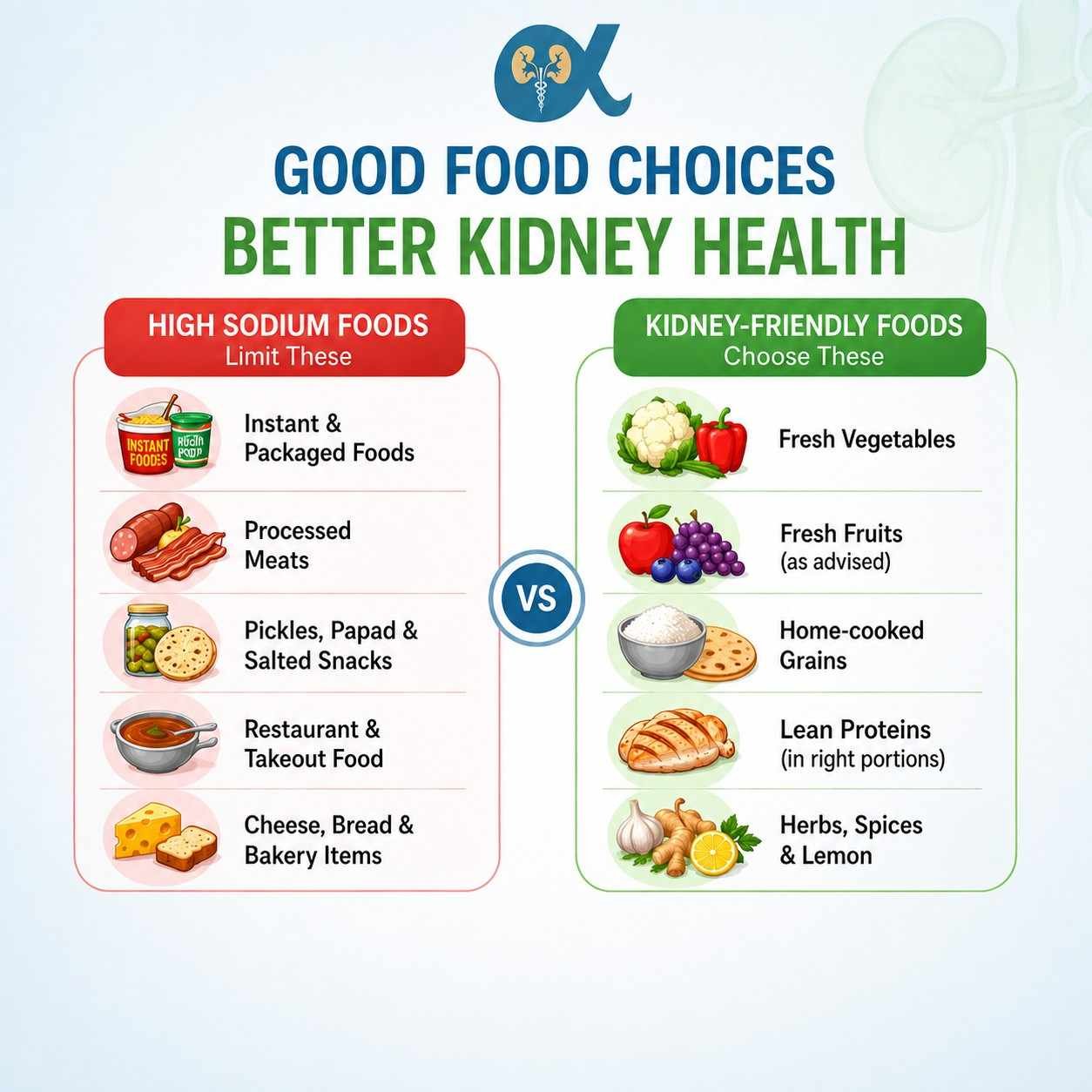
- Packaged and instant foods: instant noodles, ready-to-eat meals, canned soups
- Processed meats: sausages, bacon, salted or cured meats
- Pickles, papad, and salted snacks
- Restaurant and takeout food: especially gravies and sauces
- Cheese: especially processed cheese and cheese spreads
- Bread, biscuits, and bakery items: which often contain baking soda or added salt
Foods That Help Support Kidney Health
A kidney-friendly plate is not a bland one. Fresh, whole foods naturally contain far less sodium than packaged alternatives, and many also support kidney function directly:
- Fresh vegetables like cauliflower, cabbage, and bell peppers
- Fresh fruits such as apples, berries, and grapes (check potassium limits with your doctor first)
- Home-cooked grains like rice, poha, and unsalted rotis
- Fresh, unprocessed lean proteins in doctor-approved portions
- Herbs and spices such as garlic, ginger, coriander, and lemon for flavor instead of salt
For a more detailed, stage-specific eating plan, our kidney-friendly diet service walks you through what to eat and what to limit based on your own lab reports.
When Should You Consult a Kidney Specialist?
Talk to a nephrologist if you notice any of the following, especially alongside a known kidney condition:
- Persistent swelling in your legs, ankles, or face
- Blood pressure that stays high despite diet and medication
- Unusual fatigue, breathlessness, or reduced urine output
- Difficulty following your current sodium or fluid targets
Conclusion
Sodium is not something kidney patients need to fear, but it is something worth managing with intention. A target in the range of 1,500 to 2,300 mg a day, home-cooked meals, and a habit of checking labels can protect your blood pressure and take real pressure off your kidneys.
Expert Kideny Specialist
If you are unsure where your own sodium limit should sit, or you want a diet plan built around your latest reports, book a consultation with Dr. Ravi Bhadania.
📅 Book Appointment 📞 Contact UsFrequently Asked Questions
How much sodium is kidney-friendly?
Most kidney patients should aim for 1,500 to 2,300 mg of sodium per day, with your doctor setting the exact target based on your lab reports.
Can drinking lots of water reduce sodium?
No, extra water does not flush out sodium and can even worsen swelling and blood pressure; cutting sodium at the source is the safer approach.
How can I naturally remove sodium from my body?
Healthy kidneys clear sodium through urine on their own; there’s no supplement or shortcut, so reducing packaged and salty foods is the reliable strategy.
What drink lowers sodium?
No drink lowers sodium directly; the effective step is cutting sodium-heavy drinks and foods rather than trying to flush it out.
Does lemon reduce sodium in the body?
Lemon doesn’t remove sodium, but its bright, salty-tasting sourness makes it easier to cook with little or no added salt.