
Kidney stones are one of the most painful conditions a person can experience, and it’s no surprise that most patients search for quick relief before they even think about visiting a doctor. If you’re dealing with sudden flank pain, burning during urination, or restlessness caused by a stone, you’re probably looking for home remedies for kidney stones that actually work.
This guide explains safe, evidence-informed home remedies for kidney stones, what to avoid during an episode, and when home care simply isn’t enough, explained by a practising kidney specialist, Dr Ravi Bhadania of Alfa Kidney Care.
What Are Kidney Stones and Why Do They Hurt So Much?
A kidney stone is a hard mass made of crystallised minerals and salts that forms inside the kidney when urine becomes concentrated. As the stone moves from the kidney toward the bladder through the ureter, it can block urine flow and trigger sharp, wave-like pain in the back, side, or lower abdomen.
The size and location of the stone determine how much pain you feel. Small stones (under 4mm) often pass on their own with simple home care. Larger stones may need medical intervention, which is why understanding your symptoms early matters.
How to Treat Kidney Stones at Home
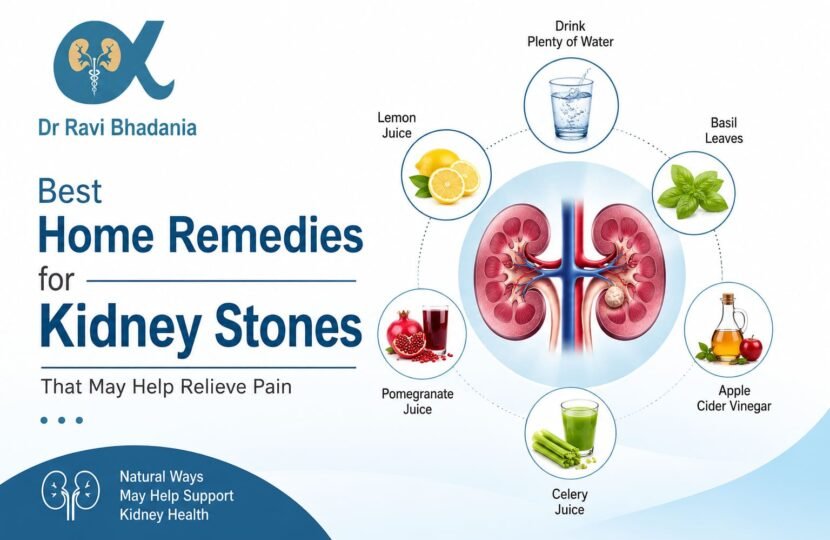
1. Increase Water Intake Significantly
Hydration is the single most effective home strategy for small kidney stones. Drinking enough water dilutes the urine, reduces crystal formation, and helps flush the stone out naturally.
- Aim for 2.5 to 3 liters of water daily, unless your doctor has restricted fluids for another condition
- Spread intake evenly through the day rather than drinking large amounts at once
- Pale yellow urine is a good sign you’re hydrated enough
2. Lemon Juice and Water
Lemon juice contains citrate, a compound known to help prevent certain types of stones (especially calcium oxalate stones) from growing larger. Mixing fresh lemon juice into water and drinking it through the day may support stone breakdown over time, though it will not dissolve an existing large stone instantly.
3. Basil (Tulsi) Leaves
Basil leaves contain acetic acid and other compounds traditionally believed to help reduce stone formation and ease discomfort. Chewing a few fresh basil leaves daily or drinking basil-infused water is a commonly used home approach in Indian households.
4. Apple Cider Vinegar (in Moderation)
Diluted apple cider vinegar (1–2 teaspoons in a glass of water) is sometimes used because of its acetic acid content, which may help soften smaller stones. It should never be consumed undiluted, and people with acidity, ulcers, or kidney function issues should avoid it without medical advice.
5. Pomegranate Juice
Pomegranate has antioxidant and astringent properties that may support urinary tract health and reduce the concentration of stone-forming substances in urine.
6. Celery Juice
Celery acts as a natural diuretic, encouraging more frequent urination, which can help flush smaller stone fragments.
Effective Home Remedies for Kidney Stone Pain
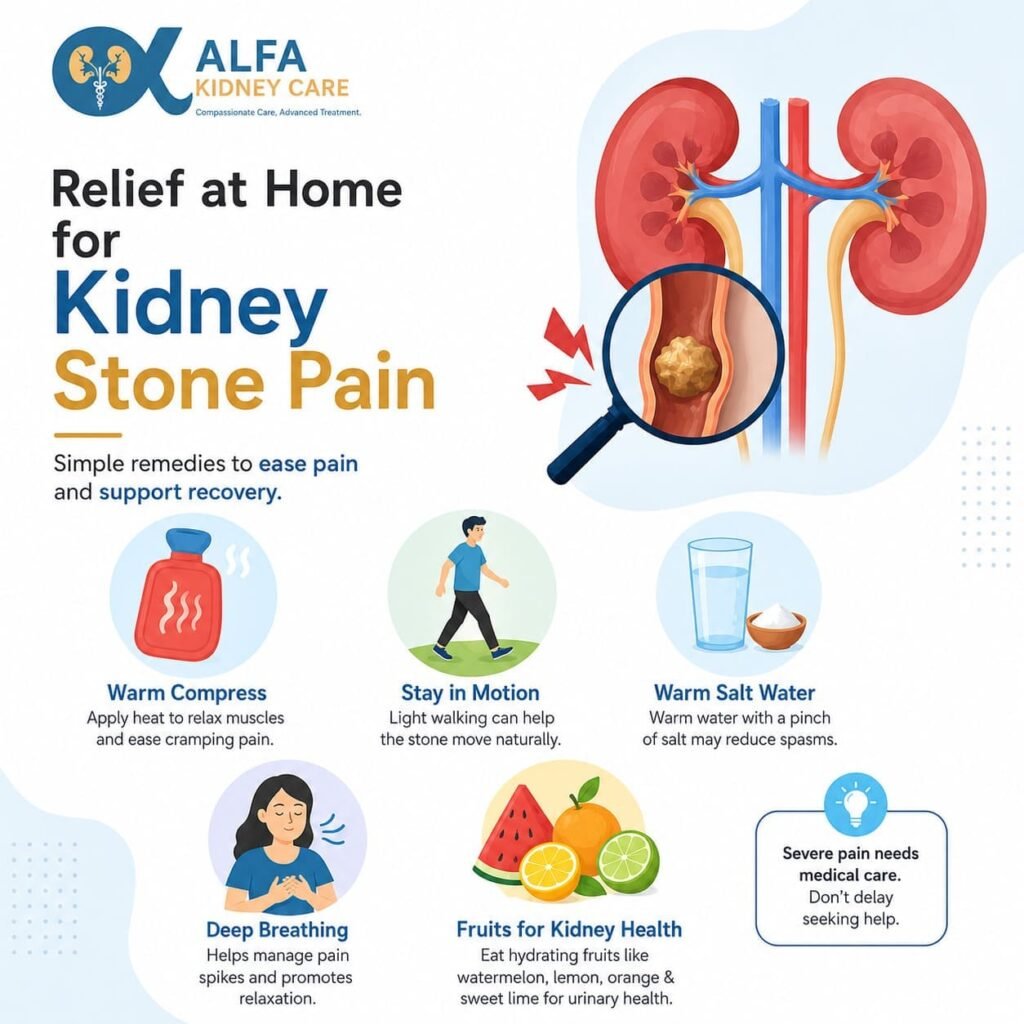
Pain relief is usually the first concern for patients. While these remedies do not eliminate the stone, they may help manage discomfort while you wait to pass it or consult a doctor.
- Warm compress: Applying a warm towel or heating pad to the back or side can relax the muscles around the ureter and ease cramping pain
- Staying in motion: Light walking can sometimes help a stone move down naturally, unlike staying still
- Warm water with a pinch of salt: May help reduce muscle spasms associated with stone movement
- Deep breathing techniques: Can help manage pain spikes while waiting for medical care
- Fruits for kidney stones: Eating hydrating fruits like watermelon, lemons, oranges, and sweet lime may support urinary health and help maintain good hydration during kidney stone recovery.
It’s important to understand that severe kidney stone pain is often comparable to labour pain, and over-the-counter pain relief combined with home care may only provide partial comfort.
What to Avoid During Kidney Stone Pain
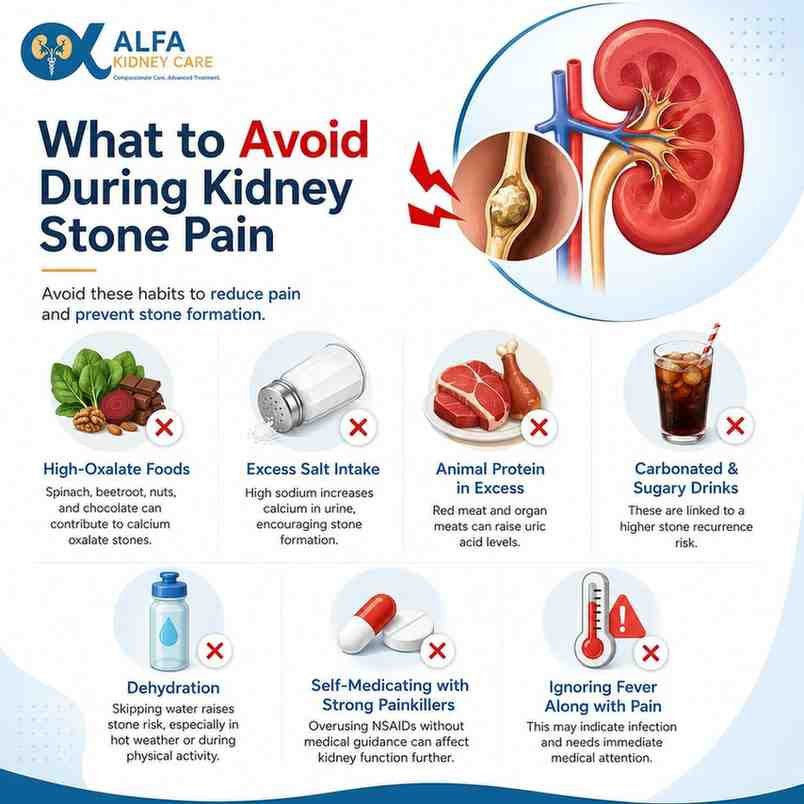
Certain habits and foods can worsen stone formation or intensify pain. During an active kidney stone episode, it’s best to avoid the following:
- High-oxalate foods: Spinach, beetroot, nuts, and chocolate can contribute to calcium oxalate stones
- Excess salt intake: High sodium increases calcium in urine, encouraging stone formation
- Animal protein in excess: Red meat and organ meats can raise uric acid levels
- Carbonated and sugary drinks: These are linked to a higher stone recurrence risk
- Dehydration: Skipping water, especially in hot weather or during physical activity, significantly raises stone risk
- Self-medicating with strong painkillers: Overusing NSAIDs without medical guidance can affect kidney function further
- Ignoring fever along with pain: This may indicate infection and needs immediate medical attention
When Home Remedies Are Not Enough
Home remedies work well for small, uncomplicated stones, but certain warning signs mean it’s time to stop self-treating and consult a specialist immediately:
- Pain that becomes unbearable or doesn’t reduce with rest
- Fever or chills along with stone pain (possible infection)
- Blood in urine that increases or persists
- Inability to urinate or very minimal urine output
- Nausea and vomiting that prevent fluid intake
- Stone pain lasting more than a few days without improvement
- History of recurrent kidney stones
If you notice any of these symptoms, home care alone is not safe, and a proper diagnostic evaluation including ultrasound, urine tests, and sometimes a CT scan, becomes necessary. Dr Ravi Bhadania has years of experience guiding patients through exactly this decision, ensuring stones are treated at the right time, the right way.
Conclusion
Home remedies can ease mild kidney stone discomfort and support the natural passage of small stones, but they aren’t a substitute for proper diagnosis. Persistent pain, fever, or blood in the urine demands prompt medical attention rather than continued self-treatment. Every case is different, and what works for one patient may not suit another.
Still in Pain? Don’t Wait It Out.
Kidney stones can escalate quickly if left untreated. Consult Dr. Ravi Bhadania (Alfa Kidney Care) for an accurate diagnosis and a personalized treatment plan based on your stone size, symptoms, and overall health history.
✔ Expert Kidney Stone Care | ✔ Personalized Treatment Plans | ✔ Advanced Diagnosis
FAQs
How can I remove kidney stones at home?
Small stones may pass naturally with high water intake, citrate-rich foods like lemon water, and light physical activity. Larger stones usually need medical treatment and cannot be safely removed at home.
What is the quickest way to pass a kidney stone?
Drinking plenty of water, staying physically active, and managing pain with warm compresses can support the faster passage of small stones. However, the actual speed depends on stone size and location.
Can kidney stones go away naturally?
Yes, smaller stones (under 4- 5 mm) often pass naturally within a few weeks. Larger stones typically require medical intervention.
What is the best drink for kidney stones?
Plain water remains the most effective, followed by lemon water and pomegranate juice, both of which support urinary health and may reduce stone-forming compounds.
Which fruit is best for kidney stones?
Citrus fruits like lemons and oranges are particularly helpful due to their citrate content, along with pomegranate for its antioxidant properties.