
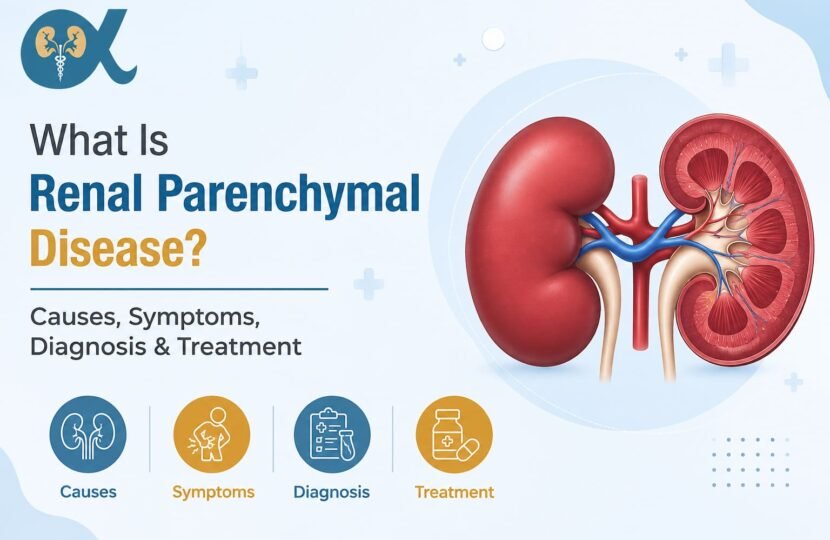
If a recent ultrasound or kidney function report mentioned “renal parenchymal disease,” it’s natural to feel a little worried especially when the term sounds technical and unfamiliar. The good news is that renal parenchymal disease is a common finding, and in many cases, it can be managed effectively when identified early.
This guide breaks down everything you need to know in simple language: what renal parenchymal disease actually means, why it happens, how doctors diagnose it, and what treatment options are available. Whether you’re trying to understand a medical report or looking for ways to protect your kidney health, this article will help you make sense of it all.
What Is Renal Parenchymal Disease?
Renal parenchymal disease (RPD) refers to changes or damage in the renal parenchyma the working tissue of the kidney that filters blood and produces urine. It is not one specific disease but a broad medical term used to describe structural or functional changes within the kidney tissue, usually identified through an ultrasound or imaging report.
The renal parenchyma includes two main parts:
- Renal cortex – the outer layer that contains millions of tiny filtering units called nephrons
- Renal medulla – the inner part that helps concentrate urine before it leaves the kidney
Causes Of Renal Parenchymal Disease
Renal parenchymal disease is most commonly caused by long-standing diabetes and high blood pressure, which gradually damage the filtering tissue of the kidneys. However, several other conditions can also lead to parenchymal changes.
Common causes include:
- Diabetic nephropathy – High blood sugar levels damage the small blood vessels in the kidneys over time
- Hypertension (high blood pressure)—Increased pressure damages kidney blood vessels and tissue
- Chronic glomerulonephritis – Inflammation of the kidney’s filtering units
- Recurrent kidney infections (pyelonephritis)—Repeated infections can cause scarring
- Polycystic kidney disease – A genetic condition causing fluid-filled cysts in kidney tissue
- Obstructive uropathy – Blockages from kidney stones or an enlarged prostate that create back pressure on the kidneys
- Autoimmune conditions – Such as lupus nephritis, where the immune system attacks kidney tissue
- Long-term use of certain medications—especially overuse of painkillers like NSAIDs
- Age-related kidney changes – Natural thinning of kidney tissue that occurs gradually with age
Symptoms Of Renal Parenchymal Disease
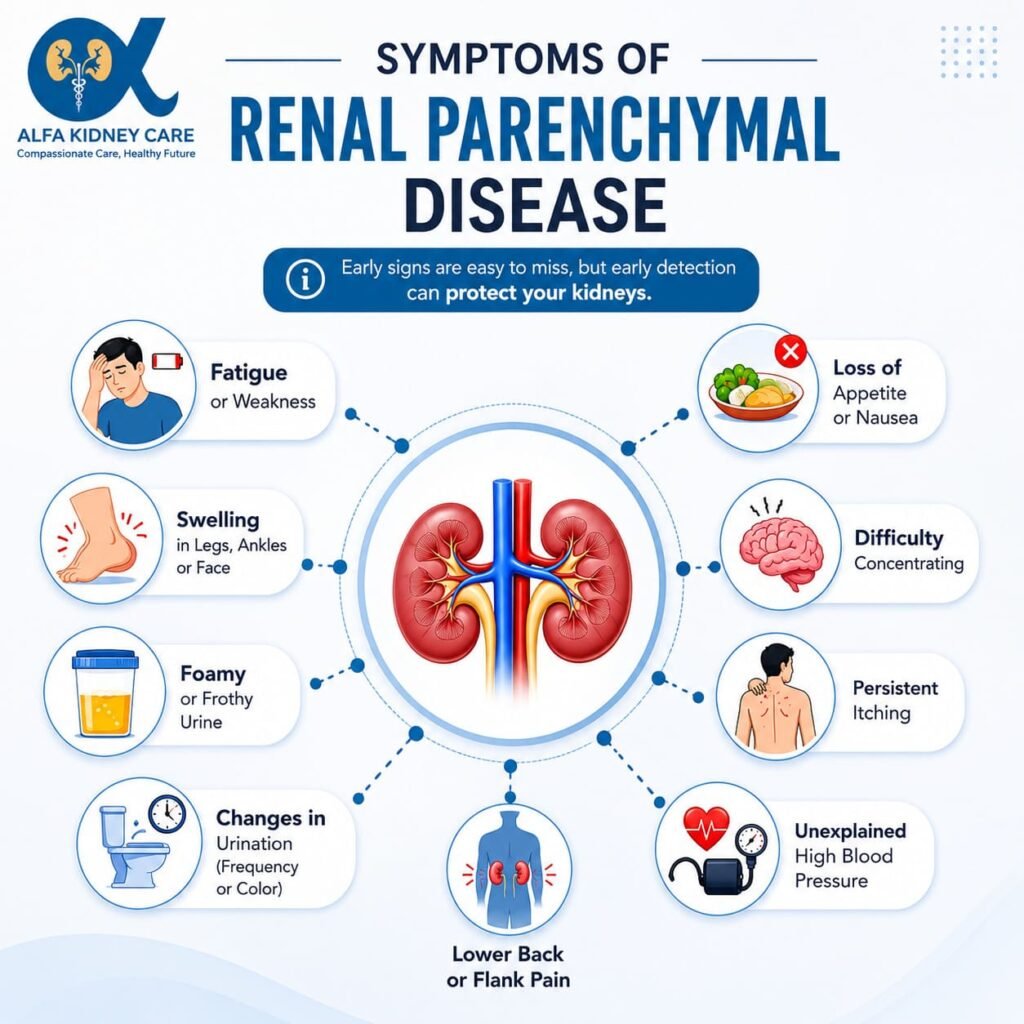
Early-stage renal parenchymal disease often shows no noticeable symptoms, which is why it is frequently discovered during a routine scan or blood test. As kidney function declines further, symptoms gradually start to appear.
Watch for these warning signs:
- Persistent fatigue or weakness
- Swelling in the legs, ankles, or face (fluid retention)
- Foamy or frothy urine (a sign of protein in urine)
- Changes in urination frequency or color
- Loss of appetite or nausea
- Difficulty concentrating
- Persistent itching
- Unexplained high blood pressure
- Lower back or flank pain in some cases
Risk Factors Patients Should Know
You may be at higher risk of developing renal parenchymal disease if you have:
- Diabetes (Type 1 or Type 2)
- Uncontrolled high blood pressure
- A family history of kidney disease
- Obesity
- Frequent or untreated urinary tract infections
- Long-term use of painkillers or certain medications
- Smoking
- Age above 60 years
- Autoimmune disorders
Diagnosis Of Renal Parenchymal Disease
Renal parenchymal disease is primarily diagnosed through an ultrasound scan, supported by blood and urine tests that assess kidney function. A precise diagnosis usually involves a combination of the following:
1. Ultrasound Imaging
This is the most common way renal parenchymal disease is detected. The scan may show increased echogenicity (brightness), reduced kidney size, or thinning of the parenchymal tissue. Reports often grade the severity as mild, moderate, or severe, which helps doctors understand how advanced the changes are.
2. Blood Tests
- Serum creatinine – Measures waste product levels in blood
- eGFR (estimated Glomerular Filtration Rate) – Indicates how well kidneys are filtering blood
- Blood Urea Nitrogen (BUN) – Another marker of kidney function
3. Urine Tests
- Urinalysis – Checks for protein, blood, or infection in urine
- Urine albumin-to-creatinine ratio (ACR) – Detects early protein leakage, often the first sign of kidney damage
4. Additional Imaging or Biopsy
In more complex cases, a CT scan, MRI, or kidney biopsy may be recommended to identify the exact cause and extent of tissue damage.
A timely and accurate diagnosis allows your kidney specialist to determine whether the condition is mild and stable, or progressing and in need of active treatment.
Treatment Options For Renal Parenchymal Disease
Treatment for renal parenchymal disease focuses on managing the underlying cause, slowing further kidney damage, and protecting remaining kidney function. There is no one-size-fits-all treatment your nephrologist will tailor the plan based on the cause and severity.
Common treatment approaches include:
- Blood pressure control – Using medications such as ACE inhibitors or ARBs, which also help protect kidney tissue
- Blood sugar management – Strict diabetes control to prevent further nephron damage
- Dietary modifications – Reduced sodium, controlled protein intake, and potassium management based on kidney function
- Treating infections promptly—especially recurrent urinary tract or kidney infections
- Medication review – Avoiding or adjusting nephrotoxic drugs, including long-term painkiller use
- Regular monitoring – Periodic blood and urine tests to track kidney function over time
- Dialysis – Required only in advanced stages when kidney function drops significantly
- Kidney transplant – Considered in end-stage kidney disease when other treatments are no longer sufficient
Can Renal Parenchymal Disease Become Dangerous?
Yes, renal parenchymal disease can become dangerous if left unmanaged, as it may progress to chronic kidney disease (CKD) and, in severe cases, kidney failure. However, the level of risk depends heavily on the grade of the condition and how well the underlying cause is controlled.
- Mild renal parenchymal changes are often manageable with lifestyle changes and medication and may remain stable for years.
- Moderate changes require closer monitoring and active treatment of the underlying condition.
- Severe parenchymal disease indicates significant tissue damage and a higher likelihood of declining kidney function, requiring specialist care.
When Should You Visit a Kidney Specialist?
Consider consulting a nephrologist if you notice:
- Persistent swelling in your legs or face
- Foamy or blood-tinged urine
- Unexplained fatigue lasting several weeks
- Elevated creatinine or abnormal eGFR on a blood test
- Uncontrolled blood pressure or diabetes
- A family history of kidney disease
- An ultrasound report mentioning renal parenchymal changes
Early consultation allows your doctor to confirm the cause, assess severity, and start treatment before further damage occurs.
If you are experiencing kidney-related symptoms or need expert guidance, consult Dr. Ravi Bhadania, an experienced Kidney Specialist in Ahmedabad at Alfa Kidney Care, for proper diagnosis and advanced treatment options.
FAQs
Q: Is renal parenchymal disease serious?
It can be serious if the underlying cause remains uncontrolled, as it may progress to chronic kidney disease. However, many mild cases stay stable for years with proper diabetes, blood pressure control, and regular monitoring by a kidney specialist.
Q: What is early stage renal disease?
Early stage renal disease means mild changes in kidney tissue or function, often without noticeable symptoms. It is usually detected through routine blood, urine, or ultrasound tests, and responds well to timely lifestyle and medical management.
Q: Can renal parenchyma repair itself?
Mild parenchymal changes can sometimes stabilize if the underlying cause, like infection or high blood sugar, is treated early. However, significant scarring of kidney tissue is generally permanent, so prevention and early treatment remain most important.
Q: What are the stages of renal parenchymal disease?
Renal parenchymal disease is graded as mild, moderate, or severe based on ultrasound findings. Mild changes are often manageable, while moderate to severe stages indicate greater tissue damage and a higher risk of declining kidney function.
Q: What can you eat with renal parenchymal disease?
Diet depends on kidney function and the underlying cause. Generally, a low-sodium, controlled-protein diet with fresh fruits, vegetables, and limited processed foods is recommended. Always follow a personalized diet plan from your nephrologist or dietitian.
Conclusion
Renal parenchymal disease is a term that often raises concern simply because it sounds unfamiliar but understanding what it actually means can take away much of that worry. In most cases, it reflects an underlying issue like diabetes, high blood pressure, or infection that, when properly managed, allows kidney function to remain stable for years.
The key takeaway is simple: early detection and consistent management make all the difference. If you’ve recently come across this term in a medical report, don’t ignore it — but don’t panic either. The right specialist guidance can help you understand exactly where you stand and what steps to take next.
If you are experiencing kidney-related symptoms or have concerns about your kidney health, timely medical attention is important. At Alfa Kidney Care, we provide expert diagnosis and advanced treatment for a wide range of kidney conditions. Early care can help protect your long-term kidney health.