

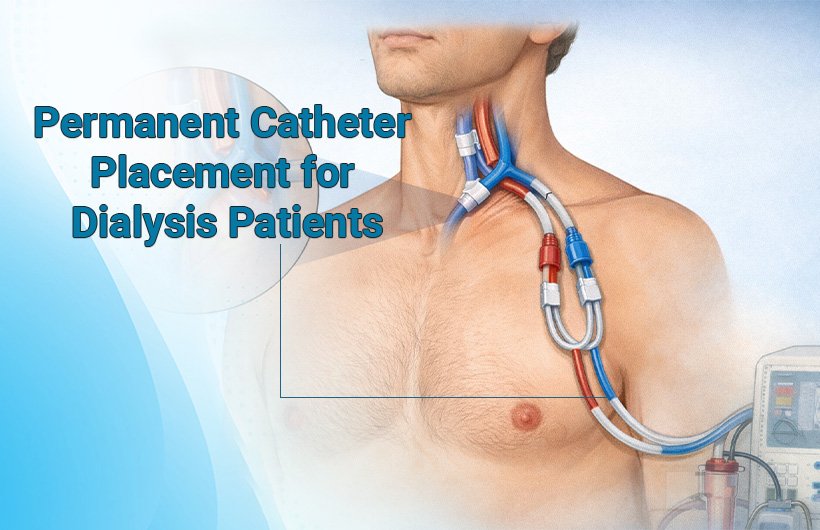
Dialysis is a life-saving treatment for individuals with advanced kidney failure. When the kidneys are no longer able to remove waste, excess fluids, and toxins from the blood, haemodialysis performs this vital function. To carry out dialysis safely and effectively, a dependable access to the bloodstream is required. One commonly used long-term access option is a permanent catheter for dialysis, also known as a tunnelled dialysis catheter or Permacath.
According to Dr Ravi Bhadania, a kidney specialist in Ahmedabad, understanding how a permanent dialysis catheter works, how it is placed, and how to care for it can help patients make informed decisions and avoid complications.
What is a Permanent Catheter for Dialysis?
A permanent catheter for dialysis is a soft, flexible tube placed into a large vein, usually in the neck or chest, to provide long-term access for hemodialysis. Unlike temporary catheters used in emergencies, permanent catheters are designed for extended use and are tunnelled under the skin to reduce infection risk.
When is a Permanent Dialysis Catheter Needed?
A permanent catheter may be recommended when:
- Dialysis is required multiple times per week
- Blood vessels are unsuitable for an AV fistula or graft
- Immediate and consistent access is necessary
- The patient is elderly or has vascular disease or other medical limitations
Although AV fistulas are often preferred for long-term dialysis, they are not suitable for every patient.
Types of Permanent Dialysis Catheters
There are two main types of catheters used for dialysis access:
1. Cuffed (Tunnelled) Catheter
- Designed for long-term use
- Has a cuff under the skin that anchors the catheter
- Lower risk of infection compared to uncuffed catheters
2. Uncuffed Catheter
- Usually used for short-term
- Often placed while waiting for another access option
- Higher infection risk if used long-term
Permanent Catheter Placement for Dialysis: Step-by-Step Procedure
The permanent catheter placement for dialysis is a minor surgical procedure, typically done under local anaesthesia.
1. Pre-Procedure Evaluation
Your doctor will review:
- Medical history
- Current medications (especially blood thinners)
- Blood tests and imaging, if required
Certain medications may need to be paused temporarily.
2. Catheter Insertion
- A small tunnel is created under the skin
- Using ultrasound or fluoroscopy, the catheter is guided into a large vein
- The cuff sits beneath the skin to secure the catheter
3. Post-Procedure Care
- The procedure usually takes 30–45 minutes
- A sterile dressing is applied
- Most patients can return home the same day
4. Healing and Use
- Mild pain, bruising, or swelling is common initially
- The site usually heals within 2–3 weeks
- Dialysis can often start immediately after placement
Benefits of a Permanent Catheter for Dialysis
- Quick and easy access for dialysis sessions
- No repeated needle sticks
- Less invasive than surgical fistula creation
- Useful when other vascular access options are not possible
Care, Maintenance, and Risks
Proper care is essential to keep a permanent catheter functioning well and to reduce complications.
Daily Care Tips
- Keep the catheter site clean and dry
- Change dressings as instructed
- Watch for redness, swelling, pain, or discharge
- Avoid pulling, twisting, or heavy activity
- Dialysis staff will flush the catheter to prevent clotting
Possible Risks and Complications
- Local or bloodstream infections
- Blood clot formation
- Reduced blood flow during dialysis compared to fistulas
Promptly report symptoms such as fever, chills, or unusual pain to your healthcare provider.
Permanent Catheter for Dialysis Cost in India
The permanent catheter for dialysis cost can vary depending on the hospital, city, and catheter type.
Approximate Cost Range:
- Catheter price: ₹8,000 to ₹20,000
- Total procedure cost may include:
- Surgeon fees
- Imaging guidance
- Hospital charges
- Post-procedure care
Patients are advised to discuss detailed pricing with their hospital before the procedure.
Permanent Catheter vs AV Fistula: Which Is Better?
- Permanent Catheter: Immediate use, less invasive, higher infection risk
- AV Fistula: Requires time to mature, lower infection risk, longer lifespan
The choice depends on vein quality, urgency of dialysis, and overall health condition.
Is Permanent Catheter Placement Right for You?
A permanent catheter for dialysis is often recommended when:
- AV fistula creation is not possible
- Immediate dialysis access is required
- Repeated needle access is difficult
Patients should discuss all available options with their nephrologist to determine the safest and most effective dialysis access.
Conclusion
Permanent catheter placement for dialysis provides a reliable and effective solution for patients who need long-term hemodialysis access and cannot undergo fistula surgery. Understanding the procedure, risks, care requirements, and costs helps patients make informed decisions. With proper maintenance and regular follow-up, a permanent catheter for dialysis can support safe and consistent treatment while improving overall comfort and quality of life. Patients are encouraged to consult Dr Ravi Bhadania to evaluate the most appropriate dialysis access option based on their individual health condition and treatment needs.
FAQs
How long does a permanent catheter for dialysis last?
With proper care, a tunnelled dialysis catheter can function for several months to years.
Is permanent catheter placement painful?
The procedure is done under local anaesthesia. Mild discomfort may occur for a few days.
Can dialysis start immediately after catheter placement?
Yes, in most cases dialysis can begin immediately.
Is a permanent catheter safe for long-term dialysis?
It is safe when properly maintained, though regular monitoring is essential to reduce infection risk.