
When you have kidney disease, what you eat directly affects how well your kidneys function. A low protein foods list for kidney disease helps reduce the workload on your kidneys and slows disease progression.
In this complete guide, you’ll learn:
- What a low-protein diet is
- Best low-protein foods (Indian-friendly)
- Foods to avoid
- A sample meal plan
- Expert tips from kidney specialists Dr. Ravi Bhadania
What is a Low Protein Diet for Kidney Disease?
A low-protein diet means reducing the amount of protein you consume daily while increasing intake of carbohydrates, healthy fats, fruits, and vegetables.
When protein breaks down, it produces waste (urea). In chronic kidney disease (CKD), damaged kidneys cannot remove this waste efficiently.
This leads to:
- Fatigue
- Nausea
- Loss of appetite
- Faster kidney damage
Benefits of a Low Protein Diet
- Reduces kidney workload
- Slows CKD progression
- Improves energy levels
- Helps maintain metabolic balance
Important: Protein should NOT be eliminated completely, only controlled.
How Much Protein Is Allowed in Kidney Disease?
Protein needs depend on the stage of CKD:
- Stage 1–2: ~0.8 g/kg body weight
- Stage 3–5 (non-dialysis): ~0.6 g/kg
- Dialysis patients: Higher protein required
Always consult a doctor before changing your diet.
Low Protein Foods List for Kidney Disease
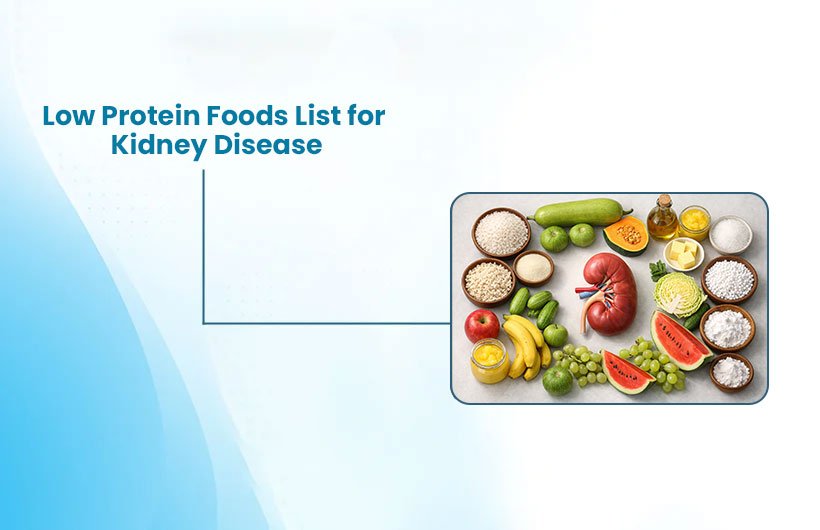
Here is a practical and Indian-friendly low protein foods list for kidney disease:
1. Fruits (Very Low Protein)
Fruits are naturally low in protein and rich in antioxidants.
Best options:
- Apple
- Banana
- Papaya
- Watermelon
- Pear
- Grapes
- Pineapple
These provide energy without stressing the kidneys.
2. Vegetables (Low Protein & Kidney-Friendly)
Vegetables help reduce acid load and support kidney health.
Best options:
- Bottle gourd (lauki)
- Pumpkin
- Cabbage
- Cauliflower
- Carrot
- Cucumber
- Capsicum
3. Grains & Cereals (Controlled Protein)
Grains contain moderate protein, so portion control is key.
Best choices:
- White rice
- Bread
- Oats
- Corn
- Poha
4. Healthy Fats (Very Low Protein)
Fats help maintain calories when protein is reduced.
Include:
- Olive oil
- Butter (limited)
- Coconut oil
- Margarine
5. Low-Protein Snacks & Extras
Safe options:
- Tea or coffee (without milk)
- Jelly or honey
- Sorbet
- Light homemade snacks
Foods to Avoid in Kidney Disease
High-protein foods increase kidney stress and should be limited:
Avoid or restrict:
- Chicken, fish, mutton
- Eggs
- Paneer, cheese
- Milk and dairy
- Soy (tofu, chunks)
- Lentils, beans, chickpeas
Also limit:
- Processed foods
- High-salt snacks
- Excess nuts & seeds
Indian Low Protein Diet Plan (Sample Day)
Breakfast
- Poha + apple
Lunch
- White rice + lauki sabzi + salad
Evening Snack
- Tea + biscuits
Dinner
- 1–2 roti + pumpkin sabzi
This ensures balanced nutrition without excess protein.
7-Day Low Protein Meal Plan (Quick Idea)
- Day 1: Rice + cabbage sabzi
- Day 2: Roti + lauki
- Day 3: Poha + fruits
- Day 4: Pasta + vegetables
- Day 5: Rice + pumpkin
- Day 6: Upma + cucumber
- Day 7: Roti + mixed veg
Expert Advice
According to Dr. Ravi Bhadania, kidney patients should:
- Focus on vegetables as the main meal
- Keep protein portions very small
- Avoid self-dieting
- Follow personalized diet plans
Every patient is different based on CKD stage and health condition.
Conclusion
Following a low-protein foods list for kidney disease can significantly help manage kidney health and slow disease progression.
The key is:
- Eat more fruits and vegetables
- Control protein intake
- Maintain proper calorie balance
- Follow a personalized diet plan
Diet plays a powerful role in kidney care, but only when done correctly.
For the best results, always seek expert guidance. If you or your loved one is dealing with kidney disease, you can consult Dr. Ravi Bhadania for a customized kidney-friendly diet and treatment plan based on your condition and stage of CKD.
Book your consultation today with Dr. Ravi Bhadania and take the right step towards better kidney health.
FAQs
1. How much protein should kidney patients eat?
It depends on CKD stage, but usually 0.6–0.8 g/kg body weight.
2. Is rice good for kidney disease?
Yes, white rice is low in protein and safe in controlled portions.
3. Can kidney patients eat dal?
Only in small amounts, as it is high in protein.
4. Which fruits are best for kidney disease?
Apple, papaya, watermelon, and grapes are excellent options.