

You check your blood sugar. You take your medication. You watch what you eat. But somewhere in that daily routine, one question usually goes unasked: what is diabetes doing to your kidneys right now?
Diabetic nephropathy, kidney damage caused by years of high blood sugar, is the leading cause of chronic kidney disease treatment cases we see at our clinic. It rarely announces itself early. There’s no pain, no obvious symptom, nothing that tells you to worry. Most patients in Ahmedabad first learn about it from a routine blood report, not from how they feel.
That gap between “feeling fine” and “kidneys are already damaged” is why diabetic patients need a different kind of vigilance than a general checkup provides. If you’ve had diabetes for more than five years, or your sugar control has been inconsistent, this is worth ten minutes of your time. As a nephrologist in Ahmedabad treating this condition regularly, here’s what we want every diabetic patient to understand.
What Exactly Is Diabetic Nephropathy?
Diabetic nephropathy is kidney damage caused by prolonged high blood sugar levels. Your kidneys contain millions of tiny filtering units, and over years of exposure to elevated glucose, the small blood vessels inside these filters get damaged. The kidneys slowly lose their ability to filter waste from your blood and start leaking protein into your urine instead of keeping it in your body.
This isn’t rare. Roughly one in three people with long-standing diabetes develops some degree of kidney involvement. It’s also not exclusive to type 1 or type 2 diabetes; both increase the risk, though the timeline differs. Type 1 diabetics typically don’t see kidney effects for the first decade, while type 2 diabetics can already have some kidney involvement by the time diabetes is diagnosed, simply because the high sugar levels may have been present, undetected, for years beforehand.
Why Does It Stay Silent for So Long?
This is the part that catches patients off guard. In the early stages, your kidneys can lose a significant amount of function while lab values still look close to normal, and you feel completely healthy.
The first measurable sign is usually a small amount of protein, specifically a protein called albumin, showing up in your urine, sometimes years before you’d notice ankle swelling, fatigue, or any of the more obvious symptoms. This is exactly why we don’t wait for symptoms in diabetic patients. We wait for the numbers.
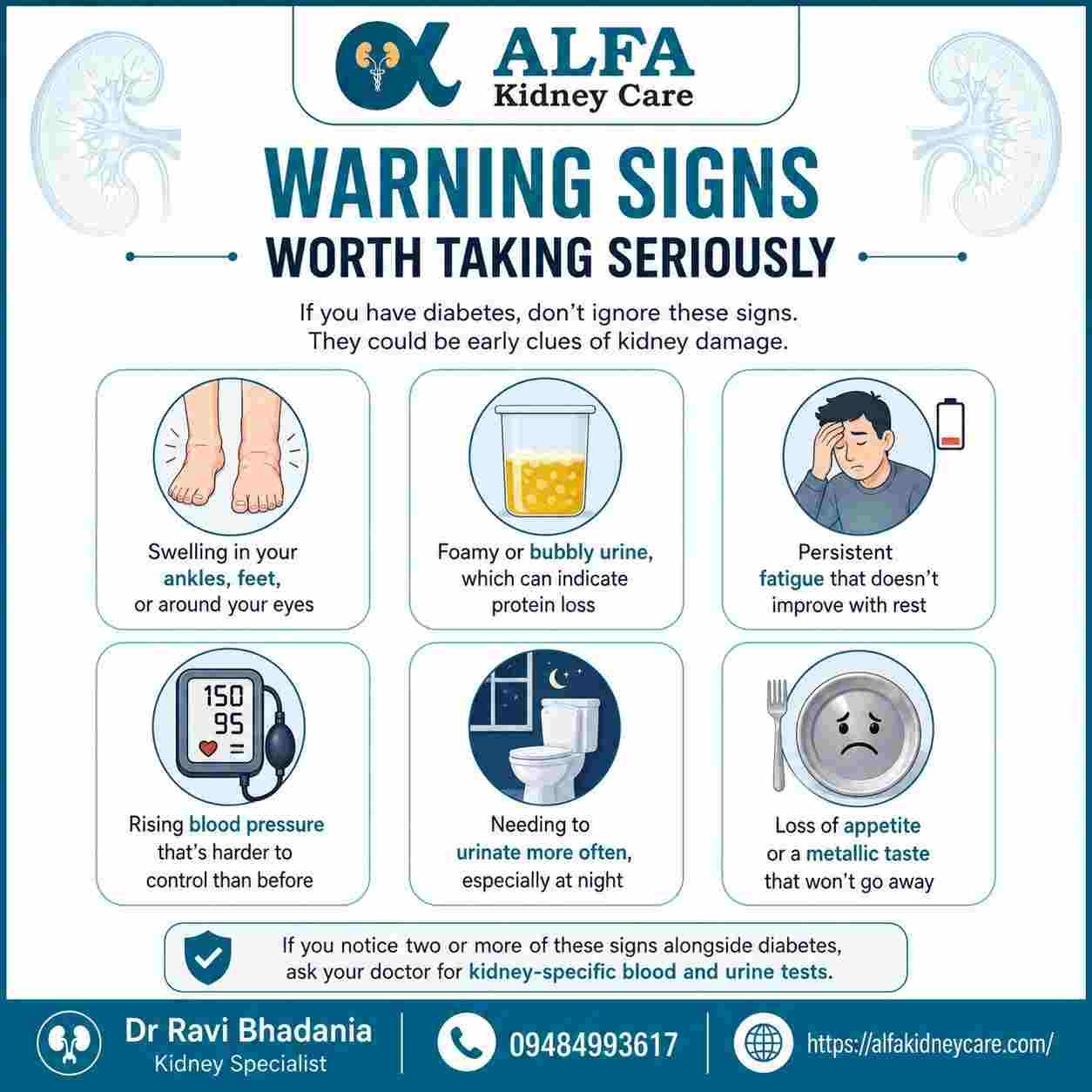
Warning Signs Worth Taking Seriously
Once kidney damage progresses past the early stage, the signs become more noticeable. None of these confirm diabetic nephropathy on their own, but if you have diabetes and notice any of them, it’s worth getting checked rather than waiting.
- Swelling in your ankles, feet, or around your eyes
- Foamy or bubbly urine, which can indicate protein loss
- Persistent fatigue that doesn’t improve with rest
- Rising blood pressure that’s harder to control than before
- Needing to urinate more often, especially at night
- Loss of appetite or a metallic taste that won’t go away
If you’re noticing two or more of these alongside a diabetes diagnosis, that’s a reasonable trigger to ask your doctor for kidney-specific blood and urine tests, not just your regular sugar panel.
How Diabetic Nephropathy Is Diagnosed
Diagnosis is straightforward and doesn’t require anything invasive in most cases. We typically start with:
- Urine albumin test: checks for small amounts of protein leaking into your urine, often the earliest detectable sign.
- Serum creatinine and eGFR: a blood test that estimates how well your kidneys are filtering, based on your creatinine level, age, and sex.
- Blood pressure trends: because high blood pressure and kidney damage tend to worsen each other in diabetic patients.
- Kidney ultrasound, if needed, to rule out other causes of the changes we’re seeing.
We recommend diabetic patients get these checked at least once a year, even with no symptoms at all. Catching this in its earliest, “protein in urine only” stage is where treatment has the most room to work.
What Actually Helps: Treatment and Management
There’s no single procedure that reverses diabetic nephropathy once it’s established, and we won’t pretend there is. What treatment does well is slow the damage down, sometimes dramatically, especially when it’s caught early.
Blood sugar control comes first. Keeping your glucose within target range reduces the ongoing damage to kidney filtering units. This usually means working closely with your diabetes physician alongside your nephrologist, not treating the two as separate problems.
Blood pressure management matters just as much as sugar control, sometimes more. Certain classes of blood pressure medication also happen to protect kidney filtering function directly, which is why your nephrologist may prescribe them even if your blood pressure numbers look acceptable.
Dietary adjustments, particularly around protein and sodium intake, reduce the workload on kidneys that are already under strain. This isn’t about extreme restriction; it’s about right-sizing what you eat to what your kidneys can currently manage.
Regular monitoring is the piece patients tend to underestimate. Diabetic nephropathy is managed over years, not fixed in a single visit. Dr. Ravi Bhadania works with diabetic patients on a monitoring schedule that adjusts as their kidney function changes, rather than a one-size-fits-all follow-up plan.
In advanced cases where kidney function has declined significantly, dialysis or transplant evaluation becomes part of the conversation. That’s not the outcome for most patients caught early, but it’s honest to say it’s part of the disease’s later stages if left unmanaged.
When Should You See a Nephrologist?
You don’t need to wait for a referral or a crisis. If you’ve had diabetes for five years or more, if your last urine test showed even trace protein, or if your blood pressure has become harder to manage, that’s a reasonable point to bring a nephrologist into your care team.
Waiting until symptoms appear means waiting until a meaningful amount of kidney function is already gone. Getting ahead of it, even by a year or two, changes what treatment can realistically achieve.
Expert Diabetic Nephropathy Treatment in Ahmedabad
If you’ve been managing diabetes for years and haven’t had a dedicated kidney check recently, that’s a gap worth closing before it becomes a bigger problem. Contact us to schedule a kidney function screening, or call us directly to discuss your diabetes and kidney health with Dr. Ravi Bhadania.
📅 Book Appointment 📞 Contact Us
Frequently Asked Questions
Can diabetic nephropathy be reversed?
Established kidney damage generally can’t be reversed, but very early-stage changes, particularly trace protein in urine, can sometimes improve with tight blood sugar and blood pressure control. This is why early detection matters so much.
How often should a diabetic get their kidneys checked?
At least once a year, through a urine albumin test and blood creatinine/eGFR, even if you feel completely fine. Your nephrologist may recommend more frequent checks if early changes are found.
Is diabetic nephropathy the same as diabetic neuropathy?
No. Nephropathy affects the kidneys, while neuropathy affects nerves, most often in the feet and hands. Both are complications of long-term high blood sugar, but they’re separate conditions requiring different monitoring.
Does type 2 diabetes cause kidney damage as often as type 1?
Type 2 diabetes is actually the more common cause of diabetic kidney disease overall, largely because it’s far more common and often goes undiagnosed for years before symptoms appear.
What blood pressure medications help protect the kidneys?
Certain classes, commonly known as ACE inhibitors or ARBs, have kidney-protective effects beyond just lowering blood pressure. Your nephrologist will determine what’s appropriate based on your individual kidney function and other medications.
This article is for informational purposes only and does not constitute medical advice. Please consult a qualified nephrologist for diagnosis and treatment tailored to your individual condition.