

Medically reviewed by Dr. Ravi Bhadania, MD (Internal Medicine), DM (Nephrology, gold medalist, SGPGIMS Lucknow), Nephrologist & Transplant Physician, Alfa Kidney Care, Ahmedabad
A kidney transplant can restore years of health and freedom to a person living with kidney failure. But even a perfectly matched transplant carries one risk that every recipient needs to understand: rejection. At Alfa Kidney Care, we help patients and families in Ahmedabad understand this process clearly. Hearing the word “rejection” can feel frightening, but in most cases, it does not mean the new kidney has failed; it means the immune system needs closer medical attention. With early detection and the right treatment, most rejection episodes are manageable, and the transplanted kidney continues to function well.
What Is Kidney Transplant Rejection?
Kidney transplant rejection is the process by which the recipient’s immune system identifies the transplanted kidney as foreign tissue and mounts an attack against it. Even when the donor is a close biological match, such as a parent, sibling, or spouse, the body’s immune system still recognises the new kidney as “not self” and may try to damage it.
Rejection is not a sign that the surgery failed. It is an immunological response that transplant medicine has been managing successfully for decades. Every kidney transplant recipient is placed on lifelong immunosuppressive (anti-rejection) medication precisely to keep this natural immune reaction under control. When rejection does occur, it is usually caught through routine blood tests and follow-up visits long before it causes permanent damage, which is why consistent post-transplant monitoring matters as much as the transplant surgery itself.
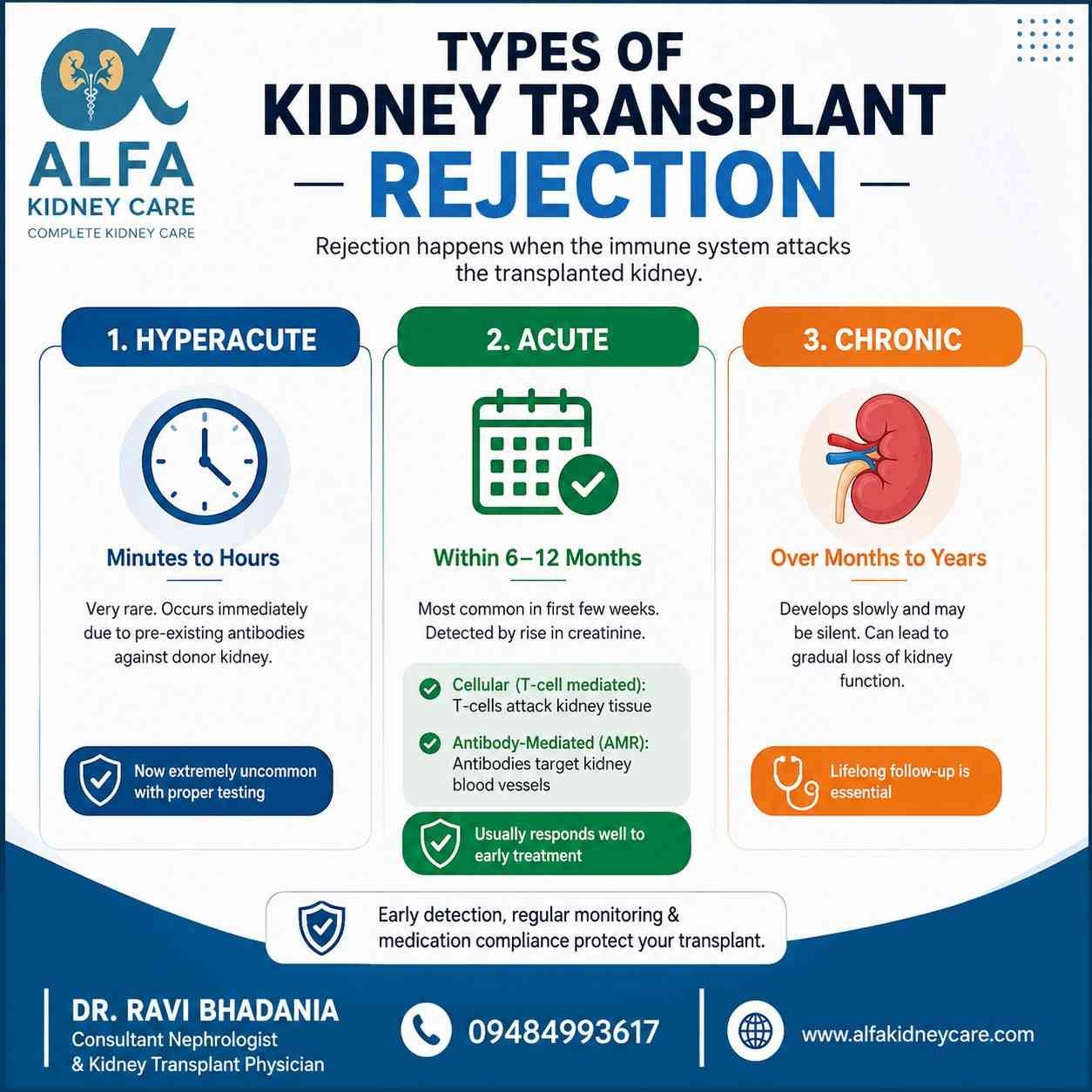
Types of Kidney Transplant Rejection
Nephrologists classify kidney transplant rejection by when it occurs and by which part of the immune system is responsible.
1. Hyperacute Rejection
This is the rarest and most immediate form, occurring within minutes to hours of the transplant, usually while the patient is still in the operating theatre. It happens when the recipient already has pre-formed antibodies against the donor kidney. Careful pre-transplant crossmatching and blood/tissue typing at the time of evaluation have made hyperacute rejection extremely uncommon today.
2. Acute Rejection
Acute rejection typically develops within the first six to twelve months after surgery, and the risk is highest in the first few weeks. It can occur suddenly and is usually detected through a rise in creatinine on routine blood work, sometimes before the patient notices any symptoms at all. Acute rejection is further divided into:
- Acute cellular (T-cell mediated) rejection: the immune system’s T-cells directly attack the kidney tissue.
- Acute antibody-mediated rejection (AMR): antibodies produced by the immune system target the blood vessels of the transplanted kidney.
Most acute rejection episodes respond well to prompt adjustment of immunosuppressive medication.
3. Chronic Rejection
Chronic rejection develops gradually, sometimes over several years, as the immune system persistently and quietly works against the kidney. It is more common than acute rejection over the lifetime of a transplant and can be harder to detect because symptoms may be subtle or absent until kidney function has already declined. This is the main reason lifelong follow-up, not just the first year after surgery, is essential for every transplant recipient.
Symptoms of Kidney Transplant Rejection
Some rejection episodes cause no noticeable symptoms at all and are picked up only through scheduled blood tests, which is why nephrologists insist on regular follow-up even when a patient feels completely well. When symptoms do appear, they often resemble a mild viral illness at first, which is why transplant recipients should never dismiss them as “just a cold” or “just tiredness.” Warning signs include:
- Reduced urine output or a noticeable drop in how often you urinate
- Fever above 100.4–101°F (38°C)
- Swelling in the ankles, feet, hands, or around the eyes
- Sudden weight gain from fluid retention, often more than 1–2 kg in a day or two
- Pain or tenderness over the transplant site, usually in the lower abdomen
- Flu-like symptoms: body aches, chills, headache, or nausea
- Unusual fatigue or a general feeling of being unwell
- Rising blood pressure that was previously well-controlled
- Shortness of breath, particularly if fluid begins to build up around the lungs
Because these symptoms overlap with common infections, dehydration, or side effects, they should never be self-diagnosed. Any of these signs after a kidney transplant warrants an urgent call to your transplant nephrologist rather than a “wait and watch” approach.
Causes of Kidney Transplant Rejection
Rejection happens because the immune system is doing exactly what it is designed to do: defending the body against tissue it perceives as foreign. Several factors can trigger or increase the risk of this response:
- Missed or irregular immunosuppressant doses: this is the single most common and most preventable cause of rejection. Even occasional missed doses can allow the immune system to regain strength against the new kidney.
- Sub-therapeutic drug levels: medication doses that are too low for the individual’s metabolism, sometimes due to interactions with other drugs, herbal supplements, or illness.
- Infections: certain viral or bacterial infections can activate the immune system in ways that also increase the risk of rejection.
- Donor-recipient tissue mismatch: closer HLA (human leukocyte antigen) matching generally lowers rejection risk, though even well-matched transplants can still experience rejection.
- Pre-existing or newly formed donor-specific antibodies: antibodies that specifically target proteins on the donor kidney.
- Underlying autoimmune conditions or a history of previous transplants, both of which can sensitise the immune system.
Understanding these triggers is why nephrologists emphasise medication adherence, routine lab monitoring, and prompt treatment of infections as the three pillars of protecting a transplanted kidney long-term.
How Is Kidney Transplant Rejection Diagnosed?
Diagnosis usually begins with the two tests your nephrologist orders at every follow-up visit, serum creatinine and blood urea nitrogen (BUN), since a rising trend in these values is often the earliest clue, even before symptoms appear. Additional tests may include:
- Urine tests to check for protein or blood
- Donor-specific antibody (DSA) testing
- Kidney ultrasound, a painless imaging test to assess blood flow and structure
- Kidney biopsy: the definitive test, where a small tissue sample is examined under a microscope to confirm rejection and identify its type
A biopsy result guides exactly how aggressively treatment needs to be adjusted, which is why it remains the gold standard whenever rejection is suspected but not yet confirmed by blood work alone.
Treatment of Kidney Transplant Rejection
The good news for most patients: a diagnosis of rejection does not mean the transplanted kidney will fail. Treatment focuses on suppressing the immune response strongly enough to stop the attack on the kidney while carefully monitoring for side effects. Common approaches include:
- Adjusting immunosuppressive therapy: increasing the existing dose or switching to a different combination of anti-rejection medicines
- High-dose corticosteroids, often given as an initial “pulse” course for acute rejection
- Plasmapheresis or IVIG (intravenous immunoglobulin) for antibody-mediated rejection, to help remove or neutralise harmful antibodies
- Short hospital admission (typically 3–5 days) for closer monitoring during acute treatment, though many mild episodes can be managed on an outpatient basis
- Treating underlying infections if these are found to be contributing to the immune activation
Most acute rejection episodes, when caught early, respond well to treatment and the kidney continues to function normally afterward. Chronic rejection is managed differently: treatment aims to slow the pace of decline and preserve kidney function for as long as possible rather than reverse damage that has already occurred, which is why early and ongoing monitoring is so valuable.
How to Reduce Your Risk of Rejection
While no transplant recipient can eliminate rejection risk entirely, these habits meaningfully lower it:
- Take immunosuppressant medication exactly as prescribed, at the same time every day, without skipping doses
- Attend every scheduled follow-up appointment and blood test, even when you feel completely well
- Report new symptoms promptly instead of waiting to see if they pass
- Avoid starting any new medication, herbal remedy, or supplement without checking with your transplant team, since several common drugs interact with immunosuppressants
- Practise good infection prevention: regular hand-washing, avoiding close contact with unwell people, and staying current on doctor-recommended vaccinations
- Manage related conditions such as diabetes and high blood pressure closely, as these also affect long-term graft health
- Maintain a kidney-friendly lifestyle, including a balanced diet and staying adequately hydrated
When to Contact Your Nephrologist Immediately
Certain signs call for urgent medical attention rather than a routine appointment:
- A sudden, significant drop in urine output
- High fever that doesn’t settle
- Rapid swelling or unexplained weight gain over 24–48 hours
- Shortness of breath or chest discomfort
- Severe pain around the transplant site
Consult a Kidney Transplant Specialist in Ahmedabad
Recognising the early signs of rejection and staying consistent with your medication and follow-up schedule are the two most powerful tools you have to protect your transplanted kidney for the long term. If you’ve had a kidney transplant and are experiencing any of the symptoms discussed above, or if you’re evaluating transplant options for kidney failure, Dr Ravi Bhadania, a dedicated nephrologist and transplant physician in Ahmedabad, and the team at Alfa Kidney Care are available for consultation and post-transplant care.
Expert Kidney Specialist
if you’re evaluating transplant options for kidney failure, Dr. Ravi Bhadania, a dedicated nephrologist and transplant physician in Ahmedabad, and the team at Alfa Kidney Care are available for consultation and post-transplant care.
📅 Book Appointment 📞 Contact Us
Frequently Asked Questions
What happens if a transplanted kidney is rejected?
Rejection means the immune system is attacking the new kidney, but it does not automatically mean the kidney will fail. In most cases, doctors adjust immunosuppressive medication to control the immune response, and the kidney continues to function. If rejection is severe or goes untreated, it can eventually lead to loss of kidney function, requiring a return to dialysis or evaluation for another transplant.
What are the different stages of transplant rejection?
Rejection is generally categorized by timing and mechanism rather than numbered stages: hyperacute (within hours of surgery), acute (within the first several months, either cellular or antibody-mediated), and chronic (developing gradually over years). A kidney biopsy helps classify the severity and specific pattern of rejection using standardized pathology grading, which guides the intensity of treatment.
How to avoid rejection after kidney transplant?
The most effective way to lower your risk is strict adherence to your prescribed immunosuppressant regimen, attending all follow-up labs and appointments, promptly reporting new symptoms, avoiding infections, and not starting any new medicines or supplements without your transplant team’s approval.
Which transplant has the highest rejection rate?
Among solid organ transplants, rejection risk varies by organ type, donor-recipient matching, and immunosuppression protocol rather than a single fixed ranking. For kidney transplants specifically, deceased-donor transplants generally carry a somewhat higher rejection risk than well-matched living-donor transplants, which is one reason living donor transplants are often preferred when a suitable donor is available.
Can rejection happen years after transplant?
Yes. While the highest-risk period for acute rejection is within the first year, chronic rejection can develop gradually and become apparent years, even a decade or more, after transplant surgery. This is why lifelong follow-up care and regular kidney function monitoring remain essential for every transplant recipient, not just in the early post-operative period.
What is a silent rejection of a kidney transplant?
“Silent” or subclinical rejection refers to rejection that shows up on a kidney biopsy or in antibody testing without causing any noticeable symptoms or even a significant rise in creatinine at the time. It is one of the reasons some transplant centres perform protocol biopsies at set intervals, since silent rejection left unaddressed can still contribute to long-term kidney damage.
This article is for general informational purposes and does not replace professional medical advice. Always consult your nephrologist or transplant team about your specific condition and treatment.