


Many patients believe a dialysis schedule means the end of holidays, family visits, or work trips, but that isn’t true. Travelling on Dialysis is absolutely possible when you plan ahead, carry the right paperwork, and consult your Kidney Specialist before booking. As a practising Kidney Specialist, Dr Ravi Bhadania regularly guides patients at Alfa Kidney Care through safe travel planning, so a change of scenery never has to mean a compromise in care. This guide answers the real question patients ask: is it possible for dialysis patients to travel, and if so, how?
Is It Possible for Dialysis Patients to Travel?
Yes, it is possible for dialysis patients to travel domestically and internationally provided their condition is medically stable and treatment is arranged in advance. Dialysis does not have to confine a patient to one city or one centre. With proper coordination between your home nephrologist and the dialysis unit at your destination, most patients on haemodialysis or peritoneal dialysis can travel safely for leisure, family events, or work.
The key factor isn’t the dialysis itself it’s the planning around it. A patient who is haemodynamically stable, free of recent infections, and compliant with fluid and dietary restrictions is generally considered a safe candidate for travel by their treating physician.
What Dialysis Patients Should Know About Travelling
Before booking tickets, there are a few essentials every patient should understand. Knowing what dialysis patients should know about travelling in advance prevents last-minute stress and medical risk.
1. Medical Clearance Comes First
Never finalise travel dates before speaking with your Kidney Specialist. Your doctor will assess your recent blood reports, dry weight, blood pressure control, and access site condition to confirm you are fit to travel.
2. Carry a Complete Medical Summary
Ask your nephrologist for a written summary that includes:
- Diagnosis and dialysis history
- Current dialysis prescription (frequency, duration, dialysate composition)
- Type of vascular access (AV fistula, graft, or catheter) or PD access details
- Recent lab reports (creatinine, potassium, haemoglobin, etc.)
- Current medication list with dosages
This document becomes essential when registering at any new dialysis centre during your trip.
3. Book Your Session Well in Advance
Dialysis slots at travel destinations fill up quickly, especially during peak tourist seasons. Most centres recommend booking 4–6 weeks ahead for domestic travel and 2–3 months ahead for international travel.
How to Find Dialysis Centres Internationally
One of the biggest concerns for patients is logistics and learning how to find dialysis centres internationally removes most of that anxiety.
- Ask your current dialysis unit many centres have tie-ups or referral networks with sister units in other cities or countries.
- Use national and international renal association directories bodies like the International Society of Nephrology and country-specific kidney foundations maintain lists of registered dialysis units.
- Contact embassy or tourism health desks for the destination country; several countries publish dialysis centre directories for travelling patients.
- Confirm details directly call or email the centre to confirm available slots, machine type, cost, accepted insurance, and documents required before you travel.
Diet and Lifestyle Management While Travelling
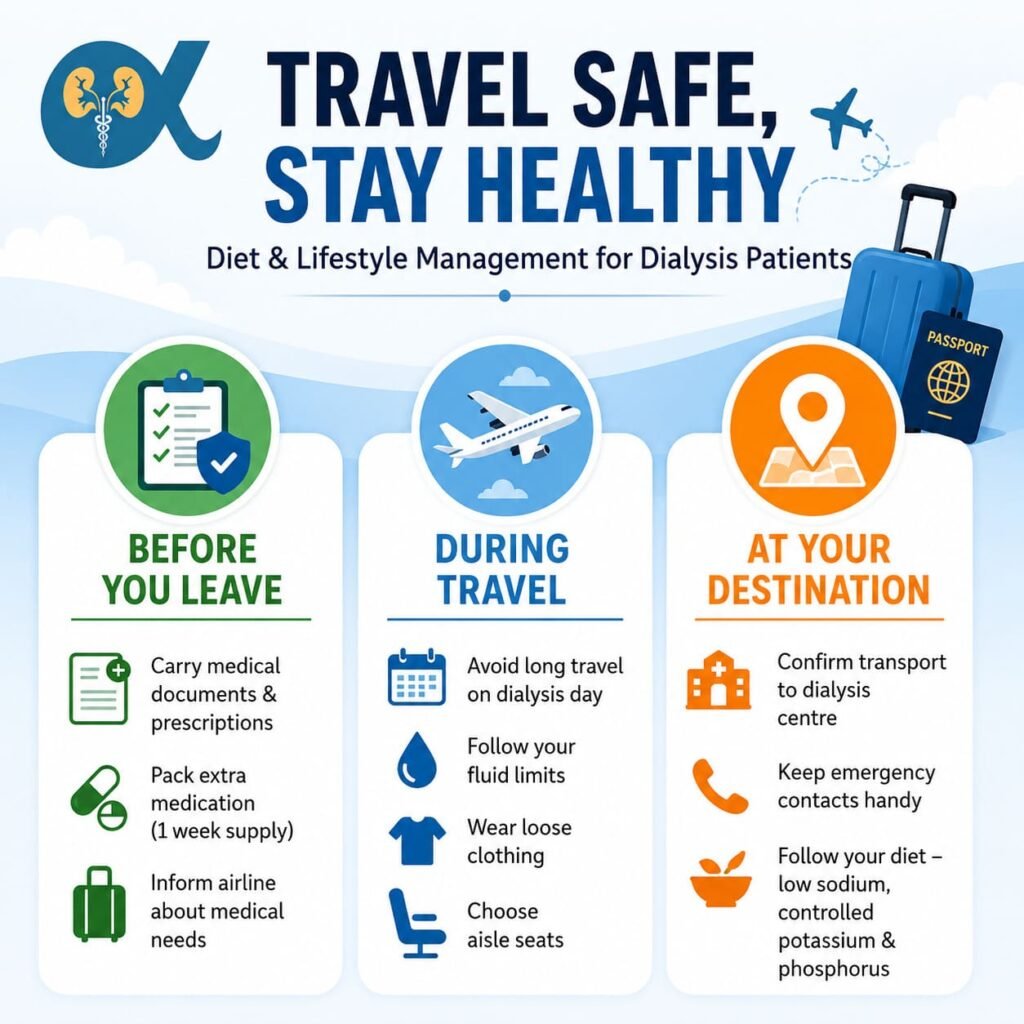
Travel often disrupts routine, and that’s exactly where dialysis patients need extra discipline. Following your hemodialysis diet while traveling is just as important as it is at home. Stick to your usual meal timings as closely as possible, and request low-sodium, low-potassium options when eating at restaurants. Carry a few dialysis-friendly snacks so you are not forced to choose unsuitable foods when options are limited. Most importantly, never skip medications because you are “on holiday”—consistency with your hemodialysis diet, medications, and treatment plan is what keeps you safe while away from your routine care team.
Tips for Safe and Comfortable Travel
These practical tips for safe and comfortable travel help reduce risk and keep the trip enjoyable rather than exhausting.
Before you leave:
- Pack all medical documents, prescriptions, and reports in your carry-on bag never in checked luggage.
- Carry at least one extra week’s supply of medication in case of travel delays.
- Inform the airline in advance if you’re carrying medical supplies, dialysis fluids, or a portable PD machine.
During travel:
- Avoid scheduling long-haul travel on the same day as a dialysis session.
- Stay within your prescribed fluid intake, even though travel often increases thirst.
- Wear loose-fitting clothing near your access site to avoid pressure or injury.
- Choose aisle seats for easier movement on long flights.
At your destination:
- Confirm transport arrangements to and from the dialysis centre beforehand.
- Keep emergency contact numbers for both your home centre and the local centre saved in your phone.
- Maintain your usual diet discipline low sodium, controlled potassium and phosphorus even while eating out.
Conclusion
Travelling on dialysis is no longer a barrier to living a full life with the right medical guidance, advance planning, and a clear understanding of how to arrange treatment away from home, patients can travel safely for both leisure and necessity. From medical clearance to locating a trusted dialysis centre at your destination, every step matters in keeping your kidney health protected while you explore the world. For safer travel planning and expert kidney care support, consulting an experienced specialist like Dr Ravi Bhadania can help ensure your journey remains comfortable, well-managed, and medically secure throughout the trip.
Plan Your Travel Safely with Expert Guidance
Don’t let dialysis hold your travel plans back. Consult Dr Ravi Bhadania, an experienced Kidney Specialist at Alfa Kidney Care, for personalised travel clearance and a complete dialysis travel plan.
✔ Expert Kidney Stone Care | ✔ Personalized Treatment Plans | ✔ Advanced Diagnosis
Frequently Asked Questions (FAQs)
1. Can kidneys start working again after dialysis?
In some cases, kidneys may recover if dialysis was started for acute kidney injury caused by a temporary condition. However, patients with chronic kidney disease or kidney failure usually require ongoing dialysis or a kidney transplant because permanent kidney function rarely returns.
2. Can dialysis patients live alone?
Yes, many dialysis patients can live independently if their overall health is stable and they follow prescribed medications, dialysis schedules, dietary restrictions, and regular medical check-ups. Family support and emergency planning can also improve safety and confidence while living alone.
3. What to expect after the first round of dialysis?
After the first dialysis session, some patients may feel tired, experience mild dizziness, muscle cramps, or slight blood pressure changes. These symptoms are usually temporary and improve as the body gradually adjusts to regular dialysis treatment.
4. How long should you rest after dialysis?
Most patients benefit from resting for one to two hours after a dialysis session, especially if they feel fatigued. Staying hydrated within prescribed limits, eating an appropriate meal, and avoiding strenuous activities can help the body recover comfortably.
5. Is it hard to sleep after dialysis?
Some dialysis patients experience difficulty sleeping due to muscle cramps, restless legs, itching, or changes in body fluid levels. Maintaining a consistent sleep routine and discussing persistent sleep problems with a Kidney Specialist can help improve sleep quality.